
Abstract
This paper examined the acute issue of frozen shoulders as an area for market discovery and opportunity. 11 current treatments and standards of care have been analyzed by reviewing their advantages and disadvantages, which showed signs of ineffectiveness and/or substantial risks. Thus, 2 key opportunities for treatment emerged: enhancing existing treatments or developing innovative new ones. Through interviews and surveys with 2 healthcare providers and 29 patients, the needs of a customer have been identified as they shared their experiences on frozen shoulders, treatments used and their effects, and their thoughts on a multifunction device. The device was a proposed solution created through innovation and a combination of modalities, specifically, acupressure and heat, cold, and massage therapy. The results demonstrated the effectiveness of heat, cold, and massage therapy especially when combined into a unit, indicating that a device integrating these modalities would significantly aid in the healing process. Additional treatments, such as red light therapy and percussion, were suggested in the interviews as potential features of the device. An original image of the frozen shoulder device was created, which included buttons and features based on the responses and feedback. The findings encouraged further research on the combined effectiveness of cyclic and intermittent therapies—specifically acupressure, percussion, red light, massage, heat therapy and cold therapy—for non-prescription treatment.
Introduction
Shockingly, 2 to 5 percent of the global population (( S. Hudnall, Frozen shoulder (adhesive capsulitis). UpToDate, https://www.uptodate.com/contents/frozen-shoulder-adhesivecapsulitis/print#:~:text=The%20lifetime%20prevalence%20of%20frozen,of%20working%20age%20%5B4%5D. (2023).)) is currently experiencing an excruciating pain in their shoulder. This condition, known as frozen shoulders, is becoming increasingly prevalent worldwide due to the rising rates of chronic diseases such as diabetes and cardiovascular disease (( U.S. Physical Therapy Services Market Size, Share & Trends Analysis Report By Settings (Hospitals, Outpatient Clinics), By Application (Orthopedic, Women Health), By Payer (Public, Private Insurance), And Segment Forecasts, 2023 – 2030. Grand View Research, https://www.grandviewresearch.com/industry-analysis/us-physical-therapy-services-market-report#.)). Simultaneously, the elderly population is also increasing, causing a proportional positive trend with the prevalence of frozen shoulders (( Frozen Shoulder Syndrome Market Size, Share, Industry, Forecast and outlook (2024-2031). DataM Intelligence, https://www.datamintelligence.com/research-report/frozen-shoulder-syndrome-market (2024).)). Originally known as ‘adhesive capsulitis’, the condition has been dubbed ‘frozen shoulder’ since 1934, which captures the significant loss of motion in the shoulder (( A. Date, L. Rahman, Frozen shoulder: overview of clinical presentation and review of the current evidence base for management strategies. Future Sci OA. 6, (2020).)). Frozen shoulders can persist for up to 3 years (( W. Aibinder, G. Athwal, J. Ho, B. Widmer, Frozen Shoulder. American Academy of Orthopaedic Surgeons, https://orthoinfo.aaos.org/en/diseases–conditions/frozen-shoulder/#:~:text=After%20a%20period%20of%20worsening,treatment%20recommendation%20for%20frozen%20shoulder.)) and typically affects individuals aged 40 to 60, with women having 4 times greater risk than men (( K. Chang, R. Coffey, K. Mezian, Frozen Shoulder. StatePearls Publishing. (2024).)). In this age group, inflammation occurs around the tissues of the shoulder, causing “severe pain and stiffness that develops gradually, worsens, and then resolves” throughout the 3 stages: freezing, frozen, and thawing stage ((E. Priscilla, Best Treatment and Home Remedies for Frozen shoulder. Fix Health,
The freezing stage lasts from 2 to 9 months, during which inflammation begins, and the shoulder slowly loses its range of movement (( How to thaw a frozen shoulder. Harvard Health Publishing, https://www.health.harvard.edu/pain/how-to-thaw-a-frozen-shoulder (2024).)). In the frozen stage, the shoulder stiffens more dramatically, reducing mobility and pain, which lasts from 4 to 6 months (( E. Priscilla, Best Treatment and Home Remedies for Frozen shoulder. Fix Health, https://www.fixhealth.com/blogs/best-treatment-and-home-remedies-for-frozen-shoulder.)). In the thawing stage, the shoulder slowly heals, but it can take from 6 months to 2 years for full recovery (( How to thaw a frozen shoulder. Harvard Health Publishing, https://www.health.harvard.edu/pain/how-to-thaw-a-frozen-shoulder (2024).)).
Frozen shoulders have 2 classifications: primary and secondary (( D. Nolan, Classification of Adhesive Capsulitis. PhysicalTherapy.com, https://www.physicaltherapy.com/ask-the-experts/classification-of-adhesive-capsulitis-3224 (2017).)). Primary classification indicates that the condition arises from an unknown cause; secondary classification, on the other hand, consists of 3 subcategories: intrinsic, extrinsic, and systemic (( D. Nolan, Classification of Adhesive Capsulitis. PhysicalTherapy.com, https://www.physicaltherapy.com/ask-the-experts/classification-of-adhesive-capsulitis-3224 (2017).)). These categories are based on the diagnosed root cause health issue that impacts a person developing frozen shoulders (( D. Nolan, Classification of Adhesive Capsulitis. PhysicalTherapy.com, https://www.physicaltherapy.com/ask-the-experts/classification-of-adhesive-capsulitis-3224 (2017).)). The intrinsic–originating “within a body, organ, or part” (( Intrinsic. Merriam-Webster, https://www.merriam-webster.com/dictionary/intrinsic#:~:text=2-,a,within%20an%20organ%20or%20part.)) subcategory suggests that an existing problem within the shoulder, such as rotator cuff and biceps tendinitis (( D. Nolan, Classification of Adhesive Capsulitis. PhysicalTherapy.com, https://www.physicaltherapy.com/ask-the-experts/classification-of-adhesive-capsulitis-3224 (2017).)), causes frozen shoulders. The extrinsic–originating “outside of a body, organ, or part” (( Extrinsic. Merriam-Webster, https://www.merriam-webster.com/dictionary/extrinsic#:~:text=%3A%20originating%20or%20due%20to%20causes,the%20part%20as%20a%20whole.))– subcategory refers to health issues outside of the shoulder such as cervical radiculopathy and heart attack (( D. Nolan, Classification of Adhesive Capsulitis. PhysicalTherapy.com, https://www.physicaltherapy.com/ask-the-experts/classification-of-adhesive-capsulitis-3224 (2017).)). Systemic frozen shoulders are associated with systemic diseases, which includes diabetes, tuberculosis, and Parkison’s disease (( Frozen Shoulder. MedPark Hospital, https://www.medparkhospital.com/en-US/disease-and-treatment/frozen-shoulder (2020).)). Despite differences in leading causes, Jeff Lombardi, PT, DPT (Prisk Orthopaedics and Wellness, Monroeville, PA) stated in an interview, “these classifications do not alter the types of standards of care used to treat their frozen shoulders”.
The shoulder is consisted of three joints (glenohumeral, acromioclavicular, sternoclavicular) and one floating joint (scapulothoracic) (( Biomechanics of the Shoulder. Physiopedia, https://www.physio-pedia.com/Biomechanics_of_the_Shoulder (2023).)). The glenohumeral joint, also known as the ball-and-socket joint, is primarily used to perform movements and daily activities with a comparatively greater range of motion; for example, simple tasks like reaching for items utilizes the glenohumeral joint (( Shoulder Muscles. Cleveland Clinic, https://my.clevelandclinic.org/health/body/21798-shoulder-muscles (2021).)). The glenohumeral joint is formed by the head of the humerus, the glenoid fossa of the scapula, ligaments, joint capsules, and muscles (( Glenohumeral Joint. Physiopedia, https://www.physio-pedia.com/index.php?title=Glenohumeral_Joint&oldid=363816 (2024).)). Ligaments include the superior glenohumeral ligament, middle glenohumeral ligament, and inferior glenohumeral ligament that serves as stabilizers to the joint capsule (( Glenohumeral Joint. Physiopedia, https://www.physio-pedia.com/index.php?title=Glenohumeral_Joint&oldid=363816 (2024).)). The glenohumeral joint capsule could be separated into three main regions: anterior, superior, and posterior (( Glenohumeral Joint. Physiopedia, https://www.physio-pedia.com/index.php?title=Glenohumeral_Joint&oldid=363816 (2024).)). In a frozen shoulder, the joint capsule is primarily affected, restricting its anterosuperior capsule that limits “external rotation in the adducted shoulder” (( J. Evans, C. Smith, H. Uppal, Frozen shoulder: A systematic review of therapeutic options. World Journal of Orthopedics. 6(2), 263–268 (2015).)), anteroinferior capsule that “produces restriction of external rotation in the abducted shoulder” (( J. Evans, C. Smith, H. Uppal, Frozen shoulder: A systematic review of therapeutic options. World Journal of Orthopedics. 6(2), 263–268 (2015).)), and posterior capsule that “reduces internal rotation of the shoulder” (( J. Evans, C. Smith, H. Uppal, Frozen shoulder: A systematic review of therapeutic options. World Journal of Orthopedics. 6(2), 263–268 (2015).)).
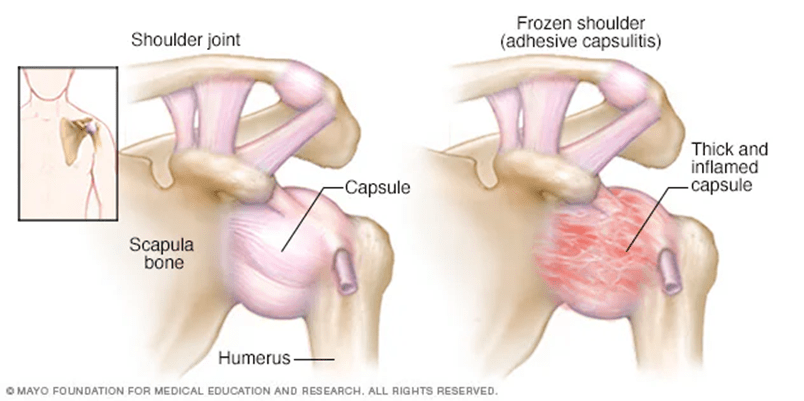
Image from Mayo Clinic presenting a visualization of the shoulder when experiencing frozen shoulders.
Thus, with the joint capsule of the glenohumeral joint mostly restricted, frozen shoulders create countless challenges in daily life, even in basic tasks such as sleeping, driving (( Cologne, Germany: Institute for Quality and Efficiency in Health Care (IQWiG), Overview: Frozen shoulder. InformedHealth.org, https://www.ncbi.nlm.nih.gov/books/NBK326432/ (Updated 2022).)), “showering, dressing, and cooking” (( F. Goldblatt, S. Lyne, E. Shanahan, Living with a frozen shoulder – a phenomenological inquiry. BMC Musculoskelet Disord, https://bmcmusculoskeletdisord.biomedcentral.com/articles/10.1186/s12891-022-05251-7#citeas (2022).)). Studies have shown that inflammation worsens at night, causing sleep to be unbearable (( Frozen Shoulder: How This Condition Impacts Your Daily Life. Chiropractor Birmingham, https://uprightposture.co.uk/articles/frozen-shoulder-how-this-condition-impacts-daily-life/.)). People found it impossible to get quality sleep and often suffered from “severe sleep deprivation” (( Frozen Shoulder: How This Condition Impacts Your Daily Life. Chiropractor Birmingham, https://uprightposture.co.uk/articles/frozen-shoulder-how-this-condition-impacts-daily-life/.)), leading to negatively impacted mental health and weakened immune system.
The aim of this research was to conduct market discovery in the field of frozen shoulders by exploring standards of care and the ideas/experiences of experts in the field while looking for opportunities to positively impact this disease state; in particular, a multifunction therapeutic device was proposed that combined the standards of care: acupressure, heat therapy, cold therapy, and massage therapy. To determine the multifunction device’s position amongst the frozen shoulder treatments and standards of care, the research first analyzed the overall market size and the various treatment segments. The research then evaluated different treatments to assess their effectiveness in practice and discussed their advantages and disadvantages. The modalities and needs for both healthcare providers and experienced patients with the diseased state were discovered through interviews and surveys. Survey responses may be biased and subjective as influenced by personal experiences, and due to constraints on the number of participants surveyed, data is limited. The focus was to understand potential improvements in care, to enhance outcomes and treatments with innovation, improved utilization of existing modalities, and optimize cyclic techniques.
Market Dynamics
In the United States, approximately 2 to 5 percent of the population experience frozen shoulders (( Ways to Release a Frozen Shoulder. Southern Pain and Neurological, https://southernpainclinic.com/blog/ways-to-release-a-frozen-shoulder/ (2023).)). This percentage makes up over 9 million Americans who suffer from this condition (( K. McAlpine, A Surprising Step Toward Melting Away “Frozen Shoulder”. Boston University The Brink, https://www.bu.edu/articles/2019/frozen-shoulder/ (2024).)).
Today, the treatment options for the frozen shoulder population range from surgery to physical therapy. For the majority, over 90% of patients seek nonsurgical treatments, with physical therapy as the most popular (( L. Torborg, Mayo Clinic Q and A: Treatment for frozen shoulder. Mayo Clinic News Network, https://newsnetwork.mayoclinic.org/discussion/mayo-clinic-q-and-a-treatment-for-frozen-shoulder/ (2018).)). Nevertheless, the rising likelihood of frozen shoulders is driving growth across all treatment markets such as the physical therapy, surgical, and injection market.
Physical therapy today is the dominant treatment due to its proven effectiveness in most cases. In fact, along with home remedies, physical therapy is a first-line treatment chiefly because of its nonsurgical nature (( Frozen Shoulder Syndrome Market Size, Share, Industry, Forecast and outlook (2024-2031). DataM Intelligence, https://www.datamintelligence.com/research-report/frozen-shoulder-syndrome-market (2024).)). In 2024, physical therapy had a market size value of $47.59 billion and is projected to reach a revenue of approximately $62.33 billion in 2030 (( U.S. Physical Therapy Services Market Size, Share & Trends Analysis Report By Settings (Hospitals, Outpatient Clinics), By Application (Orthopedic, Women Health), By Payer (Public, Private Insurance), And Segment Forecasts, 2023 – 2030. Grand View Research, https://www.grandviewresearch.com/industry-analysis/us-physical-therapy-services-market-report#.)). The market is distributed across outpatient clinics, home healthcare agencies, and hospitals (( U.S. Physical Therapy Services Market Size, Share & Trends Analysis Report By Settings (Hospitals, Outpatient Clinics), By Application (Orthopedic, Women Health), By Payer (Public, Private Insurance), And Segment Forecasts, 2023 – 2030. Grand View Research, https://www.grandviewresearch.com/industry-analysis/us-physical-therapy-services-market-report#.)). Particularly, driven by better facilities and advanced medical equipment hospitals provide, physical therapy would lead to a simultaneous “rise in the hospital segment of frozen shoulder syndrome market” (( Frozen Shoulder Syndrome Market Size, Share, Industry, Forecast and outlook (2024-2031). DataM Intelligence, https://www.datamintelligence.com/research-report/frozen-shoulder-syndrome-market (2024).)).
Surgical treatments generally have the highest costs among various types of healthcare, which can limit their market growth (( Frozen Shoulder Syndrome Market Size, Share, Industry, Forecast and outlook (2024-2031). DataM Intelligence, https://www.datamintelligence.com/research-report/frozen-shoulder-syndrome-market (2024).)). This restriction could be explained with one factor: capitation healthcare, where the patient pays a fixed amount despite the amount of sessions or type of service. As a result, providers may be incentivized to avoid high-cost treatments like surgery to stay within their budget, potentially affecting the availability and growth of surgical services. However, with advantages such as minimally invasive procedures and future technological advancements, the surgical market is anticipated to rise (( Frozen Shoulder Syndrome Market Size, Share, Industry, Forecast and outlook (2024-2031). DataM Intelligence, https://www.datamintelligence.com/research-report/frozen-shoulder-syndrome-market (2024).)). For example, in 2022, the global market size of orthopedic devices in general is $60.12 billion, and it is projected to reach $88.57 billion by 2031 (( Orthopedic Device Market Size, Share & Trends Analysis Report By Product (Arthroscopy/Soft-Tissue, Joint Reconstruction, Spine, Trauma, Orthobiologics), By End-Use (Ambulatory Surgical Center, Hospitals and Clinics) and By Region (North America, Europe, APAC, Middle East and Africa, LATAM) Forecasts, 2023-2031. Straits Research, https://straitsresearch.com/report/orthopedic-device-market (2023).)).
Injections, or specifically corticosteroid injections, have become an on demand innovative treatment as healthcare systems are recovering since Covid-19 and the Russian-Ukrainian War (( Frozen Shoulder Treatment Market: Global Market Insights and Regional Analysis (2024 – 2031). Findit, https://www.findit.com/ksizbweacnidhuq/RightNow/frozen-shoulder-treatment-market-global-market/2ec1476d-f9a6-4d56-a221-25de6e626bdd (2024).)). Corticosteroid injections is a primary type of joint injections (( Joint Injections for Hip, Knee, and Shoulder. MedStar Health, https://www.medstarhealth.org/services/joint-injections-hip-knee-and-shoulder.)) ; thus, by analyzing the joint injection market, it is anticipated to reach $12.36 billion by 2032 (( Global Joint Pain Injections Market Size Envisaged to Reach USD 12.36 Billion By 2032, Growing at 8.2% CAGR: Polaris Market Research. Yahoo Finance, https://finance.yahoo.com/news/global-joint-pain-injections-market-065000138.html (2024).)). A factor of this positive trend can be attributed to patient’s demand for natural and nonsurgical approaches, with injections fitting this need perfectly due to their minimally invasive nature and effective pain management (( Global Joint Pain Injections Market Size Envisaged to Reach USD 12.36 Billion By 2032, Growing at 8.2% CAGR: Polaris Market Research. Yahoo Finance, https://finance.yahoo.com/news/global-joint-pain-injections-market-065000138.html (2024).)).
Treatments/Standards of Care
In the field of frozen shoulders, a variety of treatments have been utilized by patients and/or prescribed by physicians. Treatments include: Steroid Injections, Physical Therapy, Massage Therapy, Acupressure, and Hydrodilatation (( Frozen Shoulder. Mayo Clinic, https://www.mayoclinic.org/diseases-conditions/frozen-shoulder/diagnosis-treatment/drc-20372690 (2022).)). Common minimally invasive surgical treatments are Shoulder Manipulation Under Anesthesia (MUA) and Arthroscopic Capsular Release (( M. Fu, Arthroscopic Shoulder Capsular Release for Frozen Shoulder (Adhesive Capsulitis). Michael Fu, MD, https://www.michaelfumd.com/frozen-shoulder-capsular-release.)). There are other treatments such as nerve stimulation, medication, acupuncture, and home remedies, but will not be discussed in this paper. In numerous cases, however, despite the variety of treatment methods available, “a majority of patients never regain the full range of motion they had before” (( S. Hudnall, Patient education: Frozen shoulder (Beyond the Basics). UpToDate, https://www.uptodate.com/contents/frozen-shoulder-beyond-the-basics/print (2023).)).
Physical Therapy
Physical therapy for frozen shoulders aims to increase the shoulder’s range of movement and reduce pain through a variety of exercises and treatments based on each stage. In the freezing stage (first stage), “range-of-motion exercises”, manual therapy, and modalities (heat and ice treatments) are utilized with the help of a physical therapist (( Physical Therapy Guide to Frozen Shoulder (Adhesive Capsulitis). ChoosePT, https://www.choosept.com/guide/physical-therapy-guide-frozen-shoulder-adhesive-capsulitis#:~:text=Your%20physical%20therapist%20will%20help,techniques%20to%20maintain%20shoulder%20movement (2017).)). A physical therapist may also recommend a home-exercise program and refer patients for injections or medications that provide short-term pain relief (( Physical Therapy Guide to Frozen Shoulder (Adhesive Capsulitis). ChoosePT, https://www.choosept.com/guide/physical-therapy-guide-frozen-shoulder-adhesive-capsulitis#:~:text=Your%20physical%20therapist%20will%20help,techniques%20to%20maintain%20shoulder%20movement (2017).)). In the frozen and thawing stage (second and third stage), a physical therapist may use manual therapy, stretching techniques, and strengthening exercises in the thawing stage (( Physical Therapy Guide to Frozen Shoulder (Adhesive Capsulitis). ChoosePT, https://www.choosept.com/guide/physical-therapy-guide-frozen-shoulder-adhesive-capsulitis#:~:text=Your%20physical%20therapist%20will%20help,techniques%20to%20maintain%20shoulder%20movement (2017).)).
Physical therapy is successful for over 90% of the time, yet may still “take up to a year to gain back all lost shoulder function” (( Frozen Shoulder. Johns Hopkins Medicine, https://www.hopkinsmedicine.org/health/conditions-and-diseases/frozen-shoulder#:~:text=Supervised%20physical%20therapy%20usually%20lasts,twice%20daily%2C%20as%20noted%20above.)). However, physical therapy requires sessions that can last from 1 to 6 weeks with a consistent frequency of 3 times per week (( Frozen Shoulder. Johns Hopkins Medicine, https://www.hopkinsmedicine.org/health/conditions-and-diseases/frozen-shoulder#:~:text=Supervised%20physical%20therapy%20usually%20lasts,twice%20daily%2C%20as%20noted%20above.)). In worse conditions, it can take “up to six months or more” sessions (( Treatment for Frozen Shoulder: When Surgery Might be Necessary. The Bone & Joint Center, https://www.bone-joint.com/treatment-for-frozen-shoulder-when-surgery-might-be-necessary/ (2024))). For each session, patients with insurance copay $20-$60 (( S. Noel, How much does physical therapy cost?. Thervo, https://thervo.com/costs/physical-therapy-cost (2023).)) ; without insurance, patients are expected to pay anywhere from $80-$150 per session (( S. Noel, How much does physical therapy cost?. Thervo, https://thervo.com/costs/physical-therapy-cost (2023).)).
Additionally, home exercises are also necessary to enhance the healing process (( S. Steets, 3 Home Exercises to Thaw a Frozen Shoulder. Virtua Health, https://www.virtua.org/articles/3-home-exercises-to-thaw-a-frozen-shoulder (2022).)), requiring consistency throughout the week. Thus, for many people, due to cost and time requirements, patients, on the majority, have a low compliance rate thus impacting their success.
Steroid Injection
Steroid injections, also called corticosteroid injections, are injected in the shoulder to provide short-term pain relief (( Frozen Shoulder: Alternatives To Surgery. Boston Sports & Biologics, https://bostonsportsandbiologics.com/blog/frozen-shoulder-alternative-to-surgery (2020).)). It is successful in reducing pain for over 95% of patients who use steroid injections, allowing for “increased motion 6 weeks post-injection” (( M. Adondakis, A. Knight, M. Pilkington, J. Skedros, Frequency of Shoulder Corticosteroid Injections for Pain and Stiffness After Shoulder Surgery and Their Potential to Enhance Outcomes with Physiotherapy: A Retrospective Study. Pain Ther. 6, 45-60 (2017).)). In order to improve the range of motion of the shoulder, home exercise programs must be used in addition to steroid injections (( Steroid injection may be the best medicine for frozen shoulder. Harvard Health Publishing, https://www.health.harvard.edu/pain/steroid-injection-may-be-the-best-medicine-for-frozen-shoulder (2021).)).
The price of costeroid injections depends on the location and health insurance status; costeroid injections may cost $20-$50 with insurance and $25-$300 without (( E. Weiman, Cortisone Injections: Cost Factors, Uses, and Side Effects. Sesame, https://sesamecare.com/blog/how-much-does-a-cortisone-injection-cost (2024).)).
Hydrodilation
Hydrodilation is an injection treatment which utilizes ultrasound guidance, an anesthetic injection to numb the pain, before finally injecting a solution into the joint capsule (( What is a hydrodilatation/hydrodistension procedure for Frozen shoulder?. The Joint Injection Clinic, https://www.google.com/url?q=https://thejointinjectionclinic.com/blog/what-is-a-hydrodilatation-procedure-for-frozen-shoulder%23&sa=D&source=docs&ust=1724118995067926&usg=AOvVaw3SxNRMDuaHU5CCYKYLiCrS (2024).)). The solution consists of a combination of saline, steroids, and lidocaine that “works to expand the joint capsule and break up adhesions” (( M. Gruner, Hydro-dila-WHAT? Hydrodilatation Injection Provides Immediate Relief for Frozen Shoulder. Dr. Marc Gruner, https://www.drmarcgruner.com/post/hydro-dila-what-hydrodilatation-injection-provides-immediate-relief-for-frozen-shoulder (2020).)). One may experience a sore sensation for a few days post-procedure (( What is a hydrodilatation/hydrodistension procedure for Frozen shoulder?. The Joint Injection Clinic, https://www.google.com/url?q=https://thejointinjectionclinic.com/blog/what-is-a-hydrodilatation-procedure-for-frozen-shoulder%23&sa=D&source=docs&ust=1724118995067926&usg=AOvVaw3SxNRMDuaHU5CCYKYLiCrS (2024).)).
After the procedure, 3 to 4 months of physiotherapy and post-injection stretching is vital for reducing pain and increasing shoulder flexibility (( Frozen Shoulder. Orthosports, https://orthosports.com.au/shoulder/frozen-shoulder/.)). For 70% of people who undergo hydrodilation, their procedure is successful and effectively improves their shoulder’s range of movement; however, there is a 2% risk of arm fracture among those who receive this treatment (( Frozen Shoulder. Orthosports, https://orthosports.com.au/shoulder/frozen-shoulder/.)).
With a full package of consultation, ultrasound, the main treatment, and post discharge care, the price is approximately $1651 (( A. Hatfield, Private Shoulder Hydrodilatation Treatment (Arthrographic Distension). Fairfield Independent Hospital, https://www.fairfield.org.uk/treatments/private-hydrodilatation-treatment/ (2023).)). As a result, hydrodilation may be costly for many patients and does not guarantee success.
Massage Therapy
Massage therapy can palliate pain and inflammation, increase range of motion, and accelerate the healing process (( A. Schultz, Can Massage Therapy Help With Frozen Shoulder?. MedMassager, https://medmassager.com/blogs/articles/can-massage-therapy-help-with-frozen-shoulder (2022).)). Different types of techniques used can serve various purposes, 2 common examples are the deep tissue massage and Swedish massage (( E. McGuire, Unlocking Relief: How Massage Therapy Can Help Treat Frozen Shoulder. ResolveWellness, https://www.resolve-wellness.com/post/massage-for-frozen-shoulder (2024).)). Deep tissue massage applies great pressure on specific areas of the shoulder to reduce stiffness; Swedish massage, on the other hand, increases circulation with its “long, flowing strokes” (( E. McGuire, Unlocking Relief: How Massage Therapy Can Help Treat Frozen Shoulder. ResolveWellness, https://www.resolve-wellness.com/post/massage-for-frozen-shoulder (2024).)).
Massage for frozen shoulders can range in price based on the types of massage, duration, and location. For instance, for 45 minutes, the cost is around $90 (( Frozen Shoulder Massage. Relax Myora Massage And Wellness Spa, https://www.relaxmyora.com/service/frozen-shoulder-massage/#:~:text=Our%20Specialized%2045%2DMinute%20Frozen,the%20discomforts%20of%20adhesive%20capsulitis.)). Clearly, massage therapy is on the cheaper end and its variety of techniques can be tailored to different patients, allowing for higher means of success.
Acupressure
A Chinese technique, known as acupressure, works by applying pressure from the fingertips to specific spots on the body. In the case of a frozen shoulder condition, acupressure helps to alleviate stress and increase energy flow in the shoulder (( Can Acupressure Help Frozen Shoulder?. World Frozen Shoulder Clinic, https://frozenshoulderclinic.com/can-acupressure-help-frozen-shoulder/ (2023).)). These specific spots to press on are called acupoints, which could also be massaged in circular motions (( Acupressure Points For Shoulder Pain. Pranamat ECO, https://pranamat.eco/acupressure-for-shoulder.)). Acupressure may be contraindicated in areas that have scar tissues, wounds, and rashes, so it is advisable to avoid those areas (( Acupressure Points For Shoulder Pain. Pranamat ECO, https://pranamat.eco/acupressure-for-shoulder.)). Success rates and prices are not well published as experts agree that “Research into the health benefits of acupressure is in its infancy, and more well-designed research is needed to determine how effective the approach is” (( Acupressure Points For Shoulder Pain. Pranamat ECO, https://pranamat.eco/acupressure-for-shoulder.))
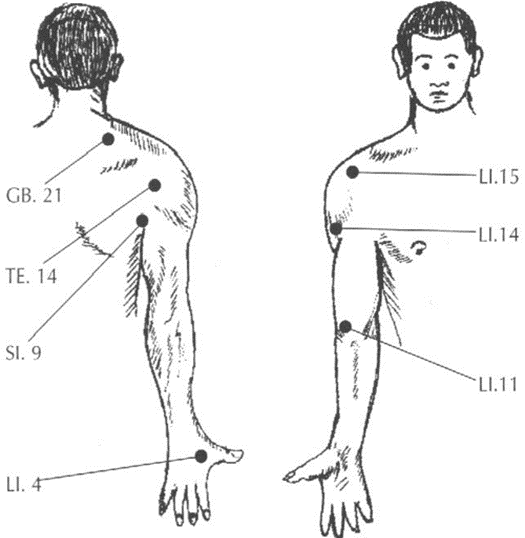
Image from Semantic Scholar showing acupoints to treat frozen shoulders.
Shoulder Manipulation Under Anesthesia (MUA)
Manipulation under anesthesia strives to increase the range of motion of a patient’s shoulder. It requires the patient to be fully anesthetized so doctors can move the shoulder with an attempt to “stretch, tear or break the scar tissue“ (( Manipulation Under Anaesthesia (MUA): Shoulder Fix Or False Cure?. World Frozen Shoulder Clinic, https://frozenshoulderclinic.com/mua-frozen-shoulder/ (2021).)). In order to maintain and improve progress, consistent physical therapy and an “intra-articular steroid injection” (( Manipulation Under Anaesthesia (MUA): Shoulder Fix Or False Cure?. World Frozen Shoulder Clinic, https://frozenshoulderclinic.com/mua-frozen-shoulder/ (2021).)) is required after the procedure.
Shoulder manipulation under anesthesia has a success rate of over 85% (( L. Beimers, M. Bekerom, D. Eygendaal, T. Kraal, I. Sierevelt, B. The, Manipulation under anaesthesia for frozen shoulders: outdated technique or well-established quick fix?. EFORT Open Rev. 4, 98-109 (2019).)). Yet, this also leaves 15% of patients with comorbidities such as arm fracture, shoulder dislocation, and nerve damage (( Manipulation Under Anaesthesia (MUA): Shoulder Fix Or False Cure?. World Frozen Shoulder Clinic, https://frozenshoulderclinic.com/mua-frozen-shoulder/ (2021).)). Additionally, 14% of patients who use MUA require re-intervention (( Manipulation Under Anaesthesia (MUA): Shoulder Fix Or False Cure?. World Frozen Shoulder Clinic, https://frozenshoulderclinic.com/mua-frozen-shoulder/ (2021).)). This treatment is contraindicated for elderly individuals, diabetics, and those with osteoporosis (( Manipulation Under Anaesthesia (MUA): Shoulder Fix Or False Cure?. World Frozen Shoulder Clinic, https://frozenshoulderclinic.com/mua-frozen-shoulder/ (2021).)). The average cost of manipulation under anesthesia is an average of $1172.25, which includes medication, pre-procedure testing, and the surgical procedure (( G. Coden, S. Kent, J. Mazzocco, R. Niu, E. Smith, D. Sun, Time-Driven Activity-Based Costs for Manipulation Under Anesthesia after Total Knee Arthroplasty. ISAKOS, https://www.isakos.com/GlobalLink/Abstract/6039#:~:text=On%20average%2C%20MUAs%20were%20found,per%20minute%20in%20phase%20two. (2023).)).
Arthroscopic Capsular Release
As a minimally invasive surgery, arthroscopic capsular release inserts a radiofrequency probe, after creating 3 small incisions, which utilizes the “waves to cut the tissue capsule that surrounds the shoulder joint” (( A. Tehrany, Arthroscopic Capsular Release. Manhattan Orthopedic Care, https://www.mocnyc.com/arthroscopic-capsular-release/.)). After the procedure, the incisions are closed with sutures and the shoulder is bandaged (( A. Tehrany, Arthroscopic Capsular Release. Manhattan Orthopedic Care, https://www.mocnyc.com/arthroscopic-capsular-release/.)). However, for the purpose of preventing the build up of scar tissue and improving the shoulder’s range of movement, one must wear a splint on their shoulder and undergo physical therapy after 1 to 2 weeks of the procedure (( A. Tehrany, Arthroscopic Capsular Release. Manhattan Orthopedic Care, https://www.mocnyc.com/arthroscopic-capsular-release/.)).
Arthroscopic capsular release is successful in 86.2% cases (( KH. Bae, KH. Koh, TK. Lim, MS. Shon, JC. Yoo, Clinical Outcome after Arthroscopic Capsular Release for Adhesive Capsulitis of the Shoulder. Clin Shoulder Elb. 21, 127-133 (2018).)) especially since the small incisions “minimizes the risk of blood loss and infection” (( Frozen Shoulder Repair – Adhesive Capsular Release. Riley J. Williams III, M.D., https://rileywilliamsmd.com/frozen-shoulder-adhesive-capsulitis-repair-orthopedic-shoulder-doctor-manhattan-new-york-city-ny/.)). Though generally safe, potential risks such as infections, blood clots, and damaged blood vessels may arise (( Shoulder Arthroscopy. Cleveland Clinic, https://my.clevelandclinic.org/health/treatments/21785-shoulder-arthroscopy (2021).)). Along with higher risks, arthroscopic capsular release also carries higher costs as the procedure ranges from around $6,000 to $10,000 pertaining to the location (( Cost of shoulder arthroscopy with incision by state. Sidecar Health, https://cost.sidecarhealth.com/ts/shoulder-arthroscopy-with-incision-cost-by-state.)).
| Treatment | Pros | Cons |
| Physical Therapy | NonsurgicalIndividualized treatment plans and learn stretching techniques (( Recover From Frozen Shoulder With Physical Therapy. Renue Physical Therapy, https://renuept.com/recover-from-frozen-shoulder-with-physical-therapy/ (2024).)) | Requires consistency Aggressive stretching may lead to adverse effects (( Frozen Shoulder. Mullen Orthopedic Clinic, http://mullenorthopedic.com/shoulder-frozen.htm.)) “physical therapy has not proven to be effective for this particular condition” (( The Do’s and Don’ts for Frozen Shoulder. Proliance Puget Sound Orthopedics, https://www.pugetsoundorthopaedics.com/health/the-dos-and-donts-for-frozen-shoulder/ (2023). )) |
| Steroid Injections | NonsurgicalEffective short-term pain relief and increase the range of motion (( Cortisone Injections For Shoulder Pain: Uses, Results, Side Effects. Harley Street Specialist Hospital, https://hssh.health/blog/cortisone-injections-for-shoulder-pain-uses-results-side-effects/ (2023). )) | Short term relief (( Cortisone Injections For Shoulder Pain: Uses, Results, Side Effects. Harley Street Specialist Hospital, https://hssh.health/blog/cortisone-injections-for-shoulder-pain-uses-results-side-effects/ (2023). )) Side effects: pain, swelling, irregular periods in women, rash, and headaches (( E. Mejia, Cortisone Injections: The Good and Bad. Sports Medicine Center, https://www.thesportsmedcenter.com/blog/cortisone-injections-the-good-and-bad.)) |
| Hydrodilation | Significant improvements (( What is a hydrodilatation/hydrodistension procedure for Frozen shoulder?. The Joint Injection Clinic, https://www.google.com/url?q=https://thejointinjectionclinic.com/blog/what-is-a-hydrodilatation-procedure-for-frozen-shoulder%23&sa=D&source=docs&ust=1724118995067926&usg=AOvVaw3SxNRMDuaHU5CCYKYLiCrS (2024).)) | Potential risks (e.g., nerve injury, bleeding, and infection) (( What is a hydrodilatation/hydrodistension procedure for Frozen shoulder?. The Joint Injection Clinic, https://www.google.com/url?q=https://thejointinjectionclinic.com/blog/what-is-a-hydrodilatation-procedure-for-frozen-shoulder%23&sa=D&source=docs&ust=1724118995067926&usg=AOvVaw3SxNRMDuaHU5CCYKYLiCrS (2024).)) |
| Massage Therapy | Enhance circulation and alleviate pain (( Frozen Shoulder Massage Therapy: Does It Work?. World Frozen Shoulder Clinic, https://frozenshoulderclinic.com/massage/ (2020).)) | Temporary effectiveness (( Frozen Shoulder Massage Therapy: Does It Work?. World Frozen Shoulder Clinic, https://frozenshoulderclinic.com/massage/ (2020).)) |
| Acupressure | Nonsurgical and drug-freeIncrease circulation, improve mobility, relieve tension, and reduce pain (( A. Waldia, Acupressure For Shoulder Pain. Core Asana, https://coreasana.com/blog/acupressure-mat-for-shoulder-pain (2023).)) | Contraindicated in areas that have scar tissues, wounds, and rashes (( Acupressure Points For Shoulder Pain. Pranamat ECO, https://pranamat.eco/acupressure-for-shoulder.)) |
| Shoulder Manipulation Under Anesthesia (MUA) | Improved range of motion (( L. Beimers, M. Bekerom, D. Eygendaal, T. Kraal, I. Sierevelt, B. The, Manipulation under anaesthesia for frozen shoulders: outdated technique or well-established quick fix?. EFORT Open Rev. 4, 98-109 (2019).)) Reduced pain (( L. Beimers, M. Bekerom, D. Eygendaal, T. Kraal, I. Sierevelt, B. The, Manipulation under anaesthesia for frozen shoulders: outdated technique or well-established quick fix?. EFORT Open Rev. 4, 98-109 (2019).)) | Surgical with risksContraindications for elderly, diabetics, and those who have osteoporosis (( L. Beimers, M. Bekerom, D. Eygendaal, T. Kraal, I. Sierevelt, B. The, Manipulation under anaesthesia for frozen shoulders: outdated technique or well-established quick fix?. EFORT Open Rev. 4, 98-109 (2019).)) Requires physical therapy and injection after procedure (( L. Beimers, M. Bekerom, D. Eygendaal, T. Kraal, I. Sierevelt, B. The, Manipulation under anaesthesia for frozen shoulders: outdated technique or well-established quick fix?. EFORT Open Rev. 4, 98-109 (2019).)) |
| Arthroscopic Capsular Release | Minimally invasive due to small incisions (( A. Tehrany, Arthroscopic Capsular Release. Manhattan Orthopedic Care, https://www.mocnyc.com/arthroscopic-capsular-release/.)) Low risk of infection (( A. Tehrany, Arthroscopic Capsular Release. Manhattan Orthopedic Care, https://www.mocnyc.com/arthroscopic-capsular-release/.)) | Potential risks (e.g., blood clots, infection, damaged blood vessels and injured nerves) (( Shoulder Arthroscopy. Cleveland Clinic, https://my.clevelandclinic.org/health/treatments/21785-shoulder-arthroscopy (2021).)) |
Summary of Healthcare Provider Treatments
Today’s standards of care, including physical therapy and arthroscopic capsular release, generally demonstrate a good success rate. However, these treatments can be difficult to access, expensive, and require consistent adherence. Additionally, they carry potential risks such as damaged nerves, bleeding, and infection.
Over the Counter Competitors in the Market Today
Currently, there are single treatment devices for the assistance of frozen shoulder recovery. These devices include shoulder pulleys, shoulder braces, and ice, heat, and light therapy.
Heat therapy is a common modality for frozen shoulders, where heat is applied to the shoulder, usually 15 to 20 minutes each time (( How to Thaw a Frozen Shoulder. Spine Correction Center of the Rockies, https://www.spinecorrectioncenter.com/how-to-thaw-a-frozen shoulder/#:~:text=Heat%20widens%20blood%20vessels%20to,20%20minutes%20at%20a%20time. (2017).)), 3 to 4 times a day (( Frozen shoulder – aftercare. Mount Sinai, https://www.mountsinai.org/health-library/selfcare-instructions/frozen-shoulder-aftercare#:~:text=Using%20moist%20heat%20on%20your,%2C%20or%20acetaminophen%20(Tylenol). (2024) )). It is most effective in the frozen and thawing stage due to its ability to widen “blood vessels to increase blood flow to the injured area” (( How to Thaw a Frozen Shoulder. Spine Correction Center of the Rockies, https://www.spinecorrectioncenter.com/how-to-thaw-a-frozen-shoulder/#:~:text=Heat%20widens%20blood%20vessels%20to,20%20minutes%20at%20a%20time. (2017).)) and can also be used before stretching to loosen up the shoulder (( Frozen Shoulder: Care Instructions. MyHealth.Alberta.ca, https://myhealth.alberta.ca/Health/aftercareinformation/pages/conditions.aspx?hwid=uf8298.)). Since heat therapy treatment is not often used alone, success rates are not well published.
Heat therapy devices are commonly in the form of heat pads that aim to increase blood flow and circulation (( B. Abelson, Frozen Shoulder: Time to Defrost. Motion Specific Release, https://www.motionspecificrelease.com/post/2018/10/17/frozen-shoulder-unthawing-the-mystery (2024).)). Prices of heat therapy devices can range from $14 to $100 depending on the quality and its features (( Heated Shoulder Pads. Walmart, https://www.walmart.com/c/kp/heated-shoulder-pads.)). For instance, some heat devices are rechargeable and cordless, while others may offer a 3 heating setting to adjust the intensity of the heat (( Heated Shoulder Pads. Walmart, https://www.walmart.com/c/kp/heated-shoulder-pads.)).
Cold therapy is best used in the freezing stage (( How to Thaw a Frozen Shoulder. Spine Correction Center of the Rockies, https://www.spinecorrectioncenter.com/how-to-thaw-a-frozen-shoulder/#:~:text=Heat%20widens%20blood%20vessels%20to,20%20minutes%20at%20a%20time. (2017).)) and serves a purpose to reduce inflammation and soreness. Similar to heat therapy devices, cold therapy devices also include shoulder pads. However, these shoulder pads usually include a cooler freeze kit to create a sustaining coolness (( 10 Best Ice Therapy Machine For Shoulder In The US. Best Product Reviews, https://www.bestproductsreviews.com/ice-therapy-machine-for-shoulder?targetid=&matchtype=&device=c&campaignid=18760692132&creative=&adgroupid=&feeditemid=&loc_physical_ms=9031610&loc_interest_ms=&network=x&devicemodel=&placement=&keyword=$&target=&aceid=&adposition=&trackid=us_all_top_1_1&mId=407-132-4411&trackOld=true&gad_source=1&gbraid=0AAAAACWZmZmJqAWzB0YWu_E7zOkr8vpOd&gclid=CjwKCAjwxY-3BhAuEiwAu7Y6sxavQkn3fhGn2fFepB6KCdixqGFY-3BEqukHbSt0VqfcpRc2auB91hoC4fsQAvD_BwE (2024).)). On average, cold therapy devices cost between $100 to $300 (( 10 Best Ice Therapy Machine For Shoulder In The US. Best Product Reviews, https://www.bestproductsreviews.com/ice-therapy-machine-for-shoulder?targetid=&matchtype=&device=c&campaignid=18760692132&creative=&adgroupid=&feeditemid=&loc_physical_ms=9031610&loc_interest_ms=&network=x&devicemodel=&placement=&keyword=$&target=&aceid=&adposition=&trackid=us_all_top_1_1&mId=407-132-4411&trackOld=true&gad_source=1&gbraid=0AAAAACWZmZmJqAWzB0YWu_E7zOkr8vpOd&gclid=CjwKCAjwxY-3BhAuEiwAu7Y6sxavQkn3fhGn2fFepB6KCdixqGFY-3BEqukHbSt0VqfcpRc2auB91hoC4fsQAvD_BwE (2024).)), which is significantly more expensive than heat therapy devices.
Light therapy pads use red light therapy, declaring it as an effective method for a natural healing process. An example would be the HealthLight Red Light Therapy Shoulder Pad, which offers 5 of these devices that vary in pad size and shape (( L. Velger, Red Light Therapy For Shoulder Pain. HealthLight, https://healthlightllc.com/2022/04/04/red-light-therapy-for-shoulder-pain/ (2022).)). Red light therapy devices are more expensive compared to other devices; for a shoulder wrap size, it can range between $100 to $500 (( Lightforce LED Red & Infrared Light Therapy Shoulder Wrap. Infrared Lights NZ, https://infraredlights.co.nz/products/copy-of-lightforce-led-red-infrared-light-therapy-40-x-20-cm-flexible-pad-3?srsltid=AfmBOoppoD9zZn-jsSrT611XX3K3BNAizahPhgSciWBR3zT7psDdMEnN.)).
Shoulder braces promote proper healing by preventing jarred movements, which can result in damaging and tearing the shoulder. Some shoulder braces have heat or cold options from numerous brands like Shock Doctor and Sparthos (( S. Babish, Buying guide for Best shoulder braces. ChicagoTribune, https://reviews.chicagotribune.com/health-and-wellness/braces/best-shoulder-braces?cid=18718368681&acid=3&aid=145400273440&eid=&tid=kwd-296582551082&ul=9031583&mt=p&n=g&d=c&dm=&dt=&sn=&adid=631122882671&k=shoulder+braces&p=&pc=&ap=&chtrb=1&gad_source=1&gbraid=0AAAAADEwahZyy8Iga7afkMFJ5BjFA0NwU&gclid=Cj0KCQjwwuG1BhCnARIsAFWBUC1Hc_NaWUAaGMj18WIfQp7da8Od0wcSmcz446xRJbXbKgJGAie2JPcaAjtgEALw_wcB (2022).)). Prices can range from $25 to $100 based on its features and functionality (( S. Babish, Buying guide for Best shoulder braces. ChicagoTribune, https://reviews.chicagotribune.com/health-and-wellness/braces/best-shoulder-braces?cid=18718368681&acid=3&aid=145400273440&eid=&tid=kwd-296582551082&ul=9031583&mt=p&n=g&d=c&dm=&dt=&sn=&adid=631122882671&k=shoulder+braces&p=&pc=&ap=&chtrb=1&gad_source=1&gbraid=0AAAAADEwahZyy8Iga7afkMFJ5BjFA0NwU&gclid=Cj0KCQjwwuG1BhCnARIsAFWBUC1Hc_NaWUAaGMj18WIfQp7da8Od0wcSmcz446xRJbXbKgJGAie2JPcaAjtgEALw_wcB (2022).)).
Shoulder pulleys can be used during physical therapy that aim to strengthen shoulders and its range of motion. Several brands that offer shoulder pulleys are Fanwer, ATENTO, and Vive (( 10 Best shoulder pulley for physical therapy in the US. Best Product Reviews, https://www.bestproductsreviews.com/shoulder-pulley-for-physical-therapy?targetid=&matchtype=&device=c&campaignid=18760692132&creative=&adgroupid=&feeditemid=&loc_physical_ms=9031583&loc_interest_ms=&network=x&devicemodel=&placement=&keyword=$&target=&aceid=&adposition=&trackid=us_all_top_1_1&mId=407-132-4411&trackOld=true&gad_source=1&gbraid=0AAAAACWZmZl-wVstS1iG3zrD1HkfhuQiI&gclid=Cj0KCQjwwuG1BhCnARIsAFWBUC0hKZZbsxHDQrBiqtVzY4B4GTDN-t65_yqx3ZNiS7-tUMikkuX-lcYaAq3MEALw_wcB (2024).)). Depending on the quality, shoulder pulleys range in price from $15 to $25 (( 10 Best shoulder pulley for physical therapy in the US. Best Product Reviews, https://www.bestproductsreviews.com/shoulder-pulley-for-physical-therapy?targetid=&matchtype=&device=c&campaignid=18760692132&creative=&adgroupid=&feeditemid=&loc_physical_ms=9031583&loc_interest_ms=&network=x&devicemodel=&placement=&keyword=$&target=&aceid=&adposition=&trackid=us_all_top_1_1&mId=407-132-4411&trackOld=true&gad_source=1&gbraid=0AAAAACWZmZl-wVstS1iG3zrD1HkfhuQiI&gclid=Cj0KCQjwwuG1BhCnARIsAFWBUC0hKZZbsxHDQrBiqtVzY4B4GTDN-t65_yqx3ZNiS7-tUMikkuX-lcYaAq3MEALw_wcB (2024).)).
Combination Therapies
A state-of-the-art combination therapy was a variation that combined brisement therapy (involves injecting a large volume of fluid into the joint to stretch out the capsule), nerve block (applied to reduce pain during brisement), and physical therapy (( Cleveland Clinic, Combination Therapy Speeds Relief of Frozen Shoulder. Cleveland Clinic, https://consultqd.clevelandclinic.org/combination-therapy-speeds-relief-of-frozen-shoulder (2022).)). It aimed to address both pain and range of motion issues, expedite relief, and even became a “first line of treatment for frozen shoulder” (( Cleveland Clinic, Combination Therapy Speeds Relief of Frozen Shoulder. Cleveland Clinic, https://consultqd.clevelandclinic.org/combination-therapy-speeds-relief-of-frozen-shoulder (2022).)) to many providers in Cleveland Clinic. The variation was contraindicated for patients with diabetes as the steroid injection in the brisement process might create rises in blood sugar leve (( Cleveland Clinic, Combination Therapy Speeds Relief of Frozen Shoulder. Cleveland Clinic, https://consultqd.clevelandclinic.org/combination-therapy-speeds-relief-of-frozen-shoulder (2022).))
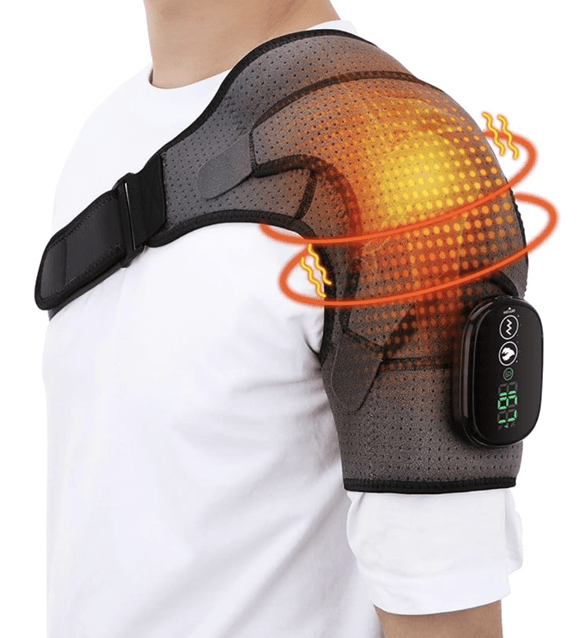
Devices that combined modalities for frozen shoulder could be exemplified by the CREATRILL Massaging Heated Shoulder Wrap Brace, Shoulder Heat Therapy Wrap Heating Pad, which combined heat therapy and vibration with adjustable sizes, “3 temperature settings and 3 vibrating modes” (( CREATRILL Massaging Heated Shoulder Wrap Brace, Shoulder Heat Therapy Wrap Heating Pad for Muscle Pain Relief, Frozen Shoulder, Bursitis, Tendonitis, Rotator Cuff. Amazon, https://www.amazon.com/CREATRILL-Massaging-Shoulder-Bursitis-Tendonitis/dp/B07MQQ3TQS.)). Reviews regarding the features were positive rather than the performance of the device (( CREATRILL Massaging Heated Shoulder Wrap Brace, Shoulder Heat Therapy Wrap Heating Pad for Muscle Pain Relief, Frozen Shoulder, Bursitis, Tendonitis, Rotator Cuff. Amazon, https://www.amazon.com/CREATRILL-Massaging-Shoulder-Bursitis-Tendonitis/dp/B07MQQ3TQS.)).
Though not targeted directly to frozen shoulder conditions, the AFDEAL Cordless Shoulder Brace combined heat and massage therapy as well as vibrations (( Cordless Shoulder Heating Pad, Heated Shoulder Wrap with Vibration, Shoulder Massager Heated Shoulder Brace for Women Men. Amazon, https://www.amazon.com/Shoulder-Vibration-Electric-Massager-Temperature/dp/B09G1LF965/ref=asc_df_B09G1LF965?mcid=ca26fe0eb13f3c478c7f866203726708&tag=hyprod-20&linkCode=df0&hvadid=693328241991&hvpos=&hvnetw=g&hvrand=13171111334338479985&hvpone=&hvptwo=&hvqmt=&hvdev=c&hvdvcmdl=&hvlocint=&hvlocphy=9031610&hvtargid=pla-1646463887693&th=1.)). It includes an LED display to choose the most comfortable temperature. There were positive reviews regarding the feature, yet the adjustability and comfortness of wearing the device was heavily criticized (( Cordless Shoulder Heating Pad, Heated Shoulder Wrap with Vibration, Shoulder Massager Heated Shoulder Brace for Women Men. Amazon, https://www.amazon.com/Shoulder-Vibration-Electric-Massager-Temperature/dp/B09G1LF965/ref=asc_df_B09G1LF965?mcid=ca26fe0eb13f3c478c7f866203726708&tag=hyprod-20&linkCode=df0&hvadid=693328241991&hvpos=&hvnetw=g&hvrand=13171111334338479985&hvpone=&hvptwo=&hvqmt=&hvdev=c&hvdvcmdl=&hvlocint=&hvlocphy=9031610&hvtargid=pla-1646463887693&th=1.)). Massage function received mixed reactions, as some felt it was too “weak” and thus, ineffective (( Cordless Shoulder Heating Pad, Heated Shoulder Wrap with Vibration, Shoulder Massager Heated Shoulder Brace for Women Men. Amazon, https://www.amazon.com/Shoulder-Vibration-Electric-Massager-Temperature/dp/B09G1LF965/ref=asc_df_B09G1LF965?mcid=ca26fe0eb13f3c478c7f866203726708&tag=hyprod-20&linkCode=df0&hvadid=693328241991&hvpos=&hvnetw=g&hvrand=13171111334338479985&hvpone=&hvptwo=&hvqmt=&hvdev=c&hvdvcmdl=&hvlocint=&hvlocphy=9031610&hvtargid=pla-1646463887693&th=1.)).
Methods
For this research, primary and secondary research methods were employed. With respect to primary, qualitative interviews and specifically designed surveys were the methods utilized to understand the needs of patients and physicians. Secondary research was also executed to understand standard of care, market opportunities, trends, and parallel markets. A multifunction device was proposed as a potential solution combining heat therapy, cold therapy, massage therapy, and acupressure features.
Patient and physician feedback could determine the advantages/disadvantages of today’s standard of care and whether the proposed solution would be feasible. Of the 31 interviewees, 2 were physicians and 29 were patients.
In executing the interviews and surveys, the interviews were conducted via the Zoom platform. Surveys, on the other hand, were created in Google Forms and sent out to frozen shoulder social groups.
For patients, the survey covered 4 major categories: their experience with frozen shoulders, the treatments utilized, their thoughts on specific modalities (heat, cold, and massage therapy), and their opinion on a multifunction device to treat frozen shoulders.
For physicians, the survey covered 4 components as well: the treatments prescribed, patient feedback, their thoughts on specific modalities (heat, cold, and massage therapy), and their opinion on a combined multifunction device to treat frozen shoulders.
Participant data was kept confidential by only including gender as a demographic and their responses to the survey questions in the tables. Emails and names of participants were also collected but not reported . Physicians were noted as Physician A and Physician B to protect patient anonymity. All feedback was included, ensuring that the results were unbiased and that each participant’s thoughts were considered carefully.
Results
The results below are summarized data for the interview and survey process, which includes feedback from physician interviews and experiences shared by patients with frozen shoulders. The interview data were put into tables, pie charts, and bar charts to clearly visualize the standards of care used by patients and how effective they were.
| Physician | A | B |
| Demographics | Male | Female |
| Occupation | Physical therapist (8 years of experience) | Physician B: – Manual Capsular Dissection (MCD) Frozen Shoulder Practitioner (7 years of experience) – Osteopathic Manual Practitioner (4 years of experience) – Certified Full Body Trigenics Practitioner (14 years of experience) – Body Trigenics Instructor (10 years of experience) – Physiotherapist (46 years of experience) |
| Summary of Patient Feedback Under Care | – Radiating pain down to arm all the way to elbow, can’t lift overhead, can’t grab things, huge inconvenience, throbs in night | – Debilitating pain that worsens at night and the inconvenience on daily life – Sense of hopeless and depression that leads to suicidal thoughts. |
| Treatments Prescribed | Physical Therapy (Modalities and Home Care Program) | MCD frozen shoulder procedure combined with myoneural rebalancing of aberrant neurological input |
| Patient Feedback on Prescribed Treatment | – Benefits in relief, healing, and strengthening | – Brought hope into life especially family life – Wished procedure was done sooner and was available in the United States |
| Feedback on multifunction device for frozen shoulders | – Should not be used for massage as it can’t control intensity based on patient emotion – Potential functions: Acupressure, red light therapy, and Vibrations/percussions | – May not address adhesions or fibrosis of the capsule – May provide relief for easier cases |
| Hot Therapy | – Used for all stages, especially chronic stages |
| Cold Therapy | – Used to reduce pain of the synovitis in the freezing stage or soreness after stretching |
| Massage Therapy | – Used for all stages, providing slight increase of range and short term relief – Risk of worsening condition |
| Experience | Patient Percentages | Feedback |
| Pain and Limited Range of Motion | 100% | – Dull pain for 24 hours a day – “Arm felt dead but still attached” – Chronic fatigue |
| Affected Daily Activities | 69% | – Can’t reach behind to grab items – Struggle to wash and tie hair – Painful to drive and cook – Hard to put on clothes – Stopped playing piano – Struggling to unload dishes – Unable to fasten seatbelt |
| Difficulty Sleeping | 52% | – Pain at night disturbs sleep – Hard to find a comfortable position – Loss of sleep |
| Zingers (( S. Hudnall, Frozen shoulder (adhesive capsulitis). UpToDate, https://www.uptodate.com/contents/frozen-shoulder-adhesive-capsulitis/print#:~:text=The%20lifetime%20prevalence%20of%20frozen,of%20working%20age%20%5B4%5D. (2023).)) | 17% | – Severe and horrible sharp pain from shoulders |
| Got Depression | 3% | – Felt life was taken away from them due to ineffective treatment |
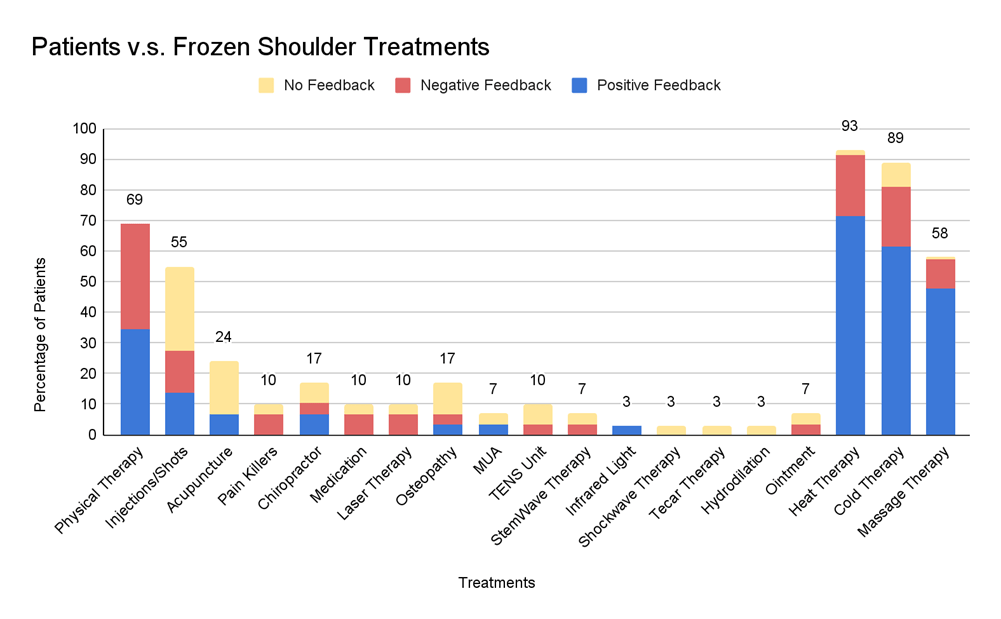
While treatments are listed separately, many patients used a combination of treatments.
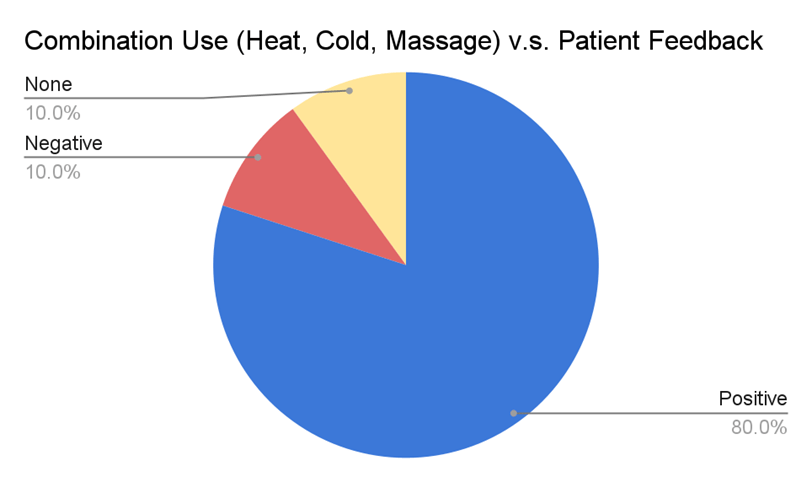
Based on the data we collected, some combination of heat, cold, and massage therapy was used by 34% of patients.
| Preference | Percentage of Patients | Reason |
| Multifunction Device | 31% | – Convenient – Requires less travel – Avoids driving which is painful |
| Physical Therapy | 31% | – Have all necessary tools and equipment – Capable of answering arising question |
| Both Multifunction Device and Physical Therapy | 17% | – Both treatment methods have their own benefits |
| Uninterpretable Feedback | 20% | Not Applicable |
Summary of results: The physicians comprise 2 distinct specialties, physical therapy and occupational therapy, offering a broader and more diverse perspective on feedback. Both physicians’s prescribed treatments have reached success and positive feedback from their patients. When focusing on heat, cold, and massage therapy, both heat and cold therapy received positive feedback, but there was mixed feedback regarding massage therapy as one physician mentioned the possibility of exacerbating the condition. Further, the physicians were inquired about their thoughts on a multifunction device for frozen shoulder. Physician A mentioned that because a device is nonhuman, it might not be best for soft tissue work due to its lack of control in intensity based on the patient’s experience and emotions, yet features such as vibrations/percussions and acupressure would work. On the other hand, Physician B suggested that the device could be only used for less severe cases. For patients, the demographics of all patients were female who reported limited mobility and functionality, continuous discomfort down the arm, and general pain specifically at night when describing their experience with frozen shoulders. Some also mentioned additional complications, such as depression. A broad scope of treatments were highlighted in the survey with a majority of patients opting for physical therapy and injections. The data collected and summarized in the tables above conveyed that heat, cold, and massage therapy were also used by most patients and effectively provided relief.
Discussion
The objective of this research was to explore the market of frozen shoulder by examining the various standards of care in frozen shoulder and gathering insights from experts. The paper discovered whether there are opportunities to improve treatment for this condition by proposing a multifunction device and evaluating its potential based on a comparison to market analysis and feedback from surveys.
First, the continuous growth of frozen shoulders globally indicated a positive trend in all treatment markets such as the physical therapy, surgical, and injection market. However, due to reported inefficiencies in current standards of care, life-threatening side effects, expensive prices, and the need for frequent sessions to sustain progress, there appeared to be opportunities to increase care with a multifunctional therapeutic device that combined therapeutic modalities in a more controlled and predictable manner. For example, current combination therapies and devices relating to frozen shoulders were introduced, which demonstrated the practicality of utilizing a multifunction device to improve frozen shoulder pain. The proposed device also had features that paralleled that of the current devices, such as intensity levels features (or “modes”), which received positive feedback from patients regarding the functionality. The intensity level features for each modality button (see Fig. 11), could allow the user to select the most suitable option for their condition and pain. Additionally, the device could also connect to an app on a phone, enhancing control and easy access to device functions without the need of reaching over to press a button. The tables above (Fig. 5 and Fig. 8) further supported the observation that healthcare providers and patients had consistent feedback on the lack of success from today’s treatments, and continuous use of heat, cold, and massage could positively impact the healing of frozen shoulders.
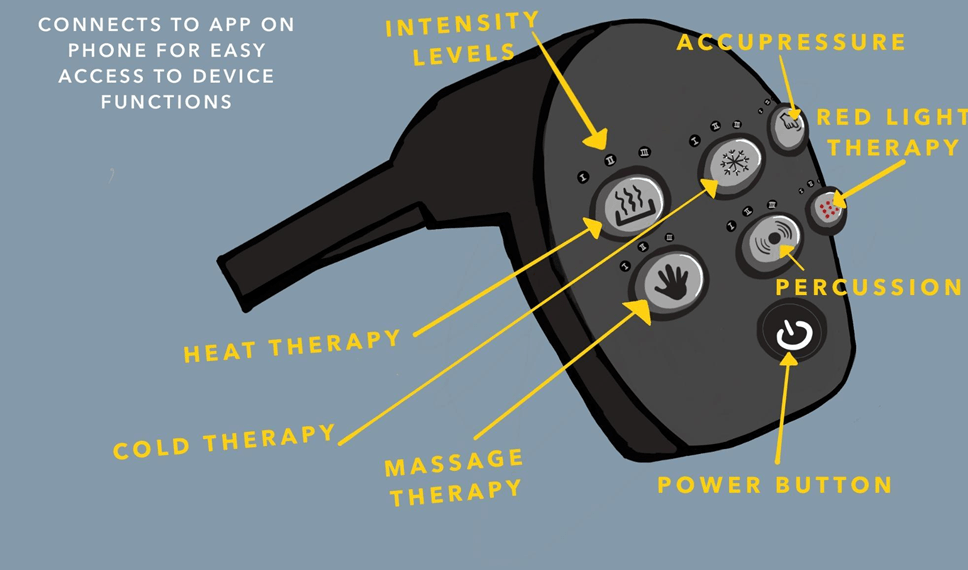
The negative feedback on the severity of frozen shoulders underscored the urgent need for effective treatments, suggesting that innovative solutions could have been particularly valuable. Patients reported dissatisfaction and ineffectiveness with various treatments, from physical therapy to manipulation under anesthesia and osteopathy, further emphasizing the demand for better alternatives.
Specifically for heat, cold, and massage therapy, original features of the multifunction device, heat and cold therapy received a majority of positive feedback, demonstrating that they are essential components for the device. Massage therapy garnered mixed reactions between patients and physicians; while physicians believed massage therapy might pose potential risks, most patients who used massage therapy reported improvement and relief. Thus, massage therapy also proved to be a vital factor of the device. Only 34% of patients used a combination of these modalities, yet 80% of those users reported benefits indicating the potential effectiveness of integrating heat, cold, and massage therapy into a single operating unit. The combination of these modalities would work together synergistically as heat therapy is preferred during the frozen stage and thawing stage, cold therapy is more suitable for freezing stage, and massage therapy helps relieve joint stiffness overall; in other words, the device provided relief treatments that is most effective for each frozen shoulder stage. Besides, if one modality does not effectively address the patient’s needs, they could always switch to the other options, allowing the device to be versatile and adaptable.
Acupressure was another originally considered component of the device. Although it was not widely mentioned by other patients, Physician A stated that acupressure would be viable as a feature of the device, underscoring its potential benefits. Physician A also mentioned the practicality of adding vibrations/percussion and red light therapy in the device, opening up additional possibilities to its functionality. The positive feedback from a patient who used red light therapy further supports the inclusion of this feature, indicating it may contribute to the device’s effectiveness. These potential additions could significantly broaden the device’s therapeutic capabilities.
When asking patients about their preferences between a multifunction device and physical therapy–being the most commonly used treatment–the data revealed an equal number of individuals opting for each option. This showcased the device’s ability to stand in the market, even against strong and well-established competitors such as physical therapy. The market analysis highlighted the growing emphasis on natural and cost-effective solutions, which aligned with the patients’ responses as well as the device’s potential for home use and patient-centered care. Despite the prevailing growth of physical therapy, challenges patients have mentioned from going to physical therapy sessions or utilizing current standards of care were cost and insurance, which would be quite expensive considering multiple sessions/visits. Besides, access to clinics could be a potential barrier considering transportation fees and the inconvenience of driving as stated by patients. Thus, the device offered distinct advantages: it would be highly convenient and cost effective as it could be used at home and at any time, reducing the need for unnecessary tests and minimizing transportation costs. As a result, they could avoid the discomfort and irritation associated with traveling for treatment.
However, there could be possible drawbacks, taken that users of the proposed device would most likely not reach out to physicians or medical professionals as the device was an “at home” treatment. Without proper guidance, patients might not know what features to use (and at their particular frozen shoulder stage), which would reduce effectiveness if used incorrectly. Patients might also overuse the features, such as applying heat for too long, which could worsen the inflammation consequently.
The research limited its scope to focusing solely on qualitative research as the participants interviewed and surveyed were few, lacking the necessary data for a full quantitative analysis. The participants for patients were all female, which is reasonable as frozen shoulder is more prevalent in women; however, only a female experience could be represented. Having male participants would provide for a wider range of perspectives and experiences. Moreover, surveyees’ responses may have potential bias, which could be subjective and influenced by personal experiences. The study did not include a control group indicating that improvements could not be definitely attributed to the combined therapies, in the presence of confounding factors. Furthermore, the study primarily focuses on short-term effects of modalities; therefore, further research on its long-term effects is essential to provide a balanced perspective.
In conclusion, frozen shoulders is a growing condition due to the prevalence of health issues such as diabetes and the elderly population. This positive trend is an indication of a continuous growth in frozen shoulder treatment markets such as physical therapy, injection, and surgical categories. The interviews and surveys with patients and healthcare providers demonstrated an opportunity through innovation to create new technology, which would combine modalities of heat, cold, and massage therapy as well as acupressure and vibrations/percussions. With unique benefits in lower risks from its natural approach and high compliance rate as it can be easily accessible, the multifunction device proved its ability to stand in the market and grow.
To further advance treatment for frozen shoulder, it is recommended to increase the number of participants in both healthcare provider and patient studies to provide more comprehensive data, which is crucial for determining the feasibility and functionality of the multifunction device. Additionally, further exploration into the effective use of combined modalities is essential. Investigating factors such as optimal duration, timing, and sequence of these treatments could lead to more effective and tailored approaches.
Ultimately, this multifunctional device demonstrated its potential to streamline care by offering a cost-effective option that could be used at home, improving accessibility and outcomes for patients with frozen shoulders. It highlights a shift away from traditional physical therapy toward patient-centered care at home.