

Abstract
Psychosis and schizophrenia impact a growing population of people worldwide. As the prevalence of psychoactive drugs, such as cannabis, stimulants like cocaine, and opium-based narcotics, including heroin and fentanyl, continues to increase, understanding their impact on mental health is increasingly crucial. Narcotics, like other psychoactive substances, are associated with long-term effects that may contribute to the development or exacerbation of psychiatric disorders—specifically psychosis and schizophrenia. This review synthesizes the long-term impact of various drugs on disease progression in individuals with psychosis and schizophrenia diagnoses by incorporating more than 40 reliable sources, including, but not limited to, resources such as NIDA, National Institute on Drug Abuse; CDC, Centers for Disease Control; NIH, National Institute of Health; and DEA, Drug Enforcement Administration. Using the PRISMA guidelines for a general outline enhanced the reliability of the paper through its form and structure. Throughout the research, there was an exclusion of drugs that aren’t narcotics, psychoactive, or stimulants, such as inhalants or depressants. Current research looks at drugs like THC and other hallucinogenic drugs, but few look at the impact of opium-based drugs on disease development and its progression. Although this paper includes a few diverse drugs, it explicitly outlines the effects of various drugs, including psychoactive drugs and narcotics, on individuals with psychosis and schizophrenia. This paper seeks to explore the intersection of narcotic use with mental health disorders, particularly in marginalized populations affected by psychosis and schizophrenia, and examine how the recreational use of narcotics impacts the development of psychosis and schizophrenia. There is no direct correlation between drug use and the onset of psychosis or schizophrenia; however, drug use can augment the symptoms that occur from these disorders. Nevertheless, with additional implementation of research, earlier prognoses may be available to identify these disorders before they have onset and view the direct impact that the consumption of drugs has.
Keywords: narcotics, opium, fentanyl, psychosis, schizophrenia, psychotic episodes
Introduction
In both adolescents and adults, the usage of narcotics, and drugs like heroin, cocaine, and methamphetamines has increased significantly since 2020 ((Charlotte Lozier Institute, Map: Assisted suicide in the states. https://lozierinstitute.org/map-assisted-suicide-in-the-states/ (2021).; NCDAS, Substance abuse and addiction statistics. https://drugabusestatistics.org/ (2023). )). 59.277 million people aged 12 and older have been users of illegal drugs or misused prescribed drugs, and hundreds of thousands of people in 2018 alone have exploited drugs such as heroin and fentanyl ((NCDAS, Substance abuse and addiction statistics. https://drugabusestatistics.org/ (2023). ; American Addiction Centers, Alcohol and drug abuse statistics (facts about addiction). https://americanaddictioncenters.org/addiction-statistics (2016).)). Narcotics, such as heroin and fentanyl, cannabinoids, and stimulants, like cocaine, consumption can create adverse effects. For people with schizophrenia, chronic abuse and increased consumption of narcotics may increase the severity of psychotic episodes ((S. Mosel, S. Newman, R. Kelley, Schizophrenia and addiction. https://americanaddictioncenters.org/co-occurring-disorders/psychotic-disorders/schizophrenia (2015).)). Additionally, those who have schizophrenia are at greater risk of addiction to substances. Specifically, 20.4 million American adults have simultaneously suffered from a substance abuse disorder and a mental health disorder, which may encompass schizophrenia, and result in psychosis ((American Addiction Centers, Alcohol and drug abuse statistics (facts about addiction). https://americanaddictioncenters.org/addiction-statistics (2016).)). Today, there is a lack of comprehensive data on preventive measures taken for individuals diagnosed with psychosis and schizophrenia under the use of narcotics. There is a deficit of research that is solely aimed at the correlation between drug use and the direct effect on the onset of psychosis and schizophrenia before its diagnosis.
This review examines the development of psychosis and schizophrenia following the recreational use of narcotics. It provides an overview of drugs, their impact on comorbid disorders—specifically psychosis and schizophrenia—supported by MRI results in affected patients. From the context of 21st-century trends, such as the rise of artificial intelligence (AI) in contemporary medicine, to narcotic use, this paper systematically reviews reliable sources through extensive guidelines to produce unbiased results on the impact of drugs on specific psychiatric disorders.
It will reveal the gaps in the literature and serve as a catalyst for additional research to be done to look into preventative care as well as potential treatments for people diagnosed with psychosis and schizophrenia following narcotic usage.
Literature Review
Schizophrenia & Psychosis
Psychosis and schizophrenia can be confused as the same thing, but the latter is a disorder, while the former is a group of symptoms. However, both are very prominent globally and nationwide, affecting millions of people. Schizophrenia is a mental illness that can reduce someone’s life span by around 15 years, but it alters the behavior and thoughts of a person ((R. S. Kahn, On the origins of schizophrenia. The American Journal of Psychiatry. 177(4), 291–297 (2020).; National Institute of Mental Health, Schizophrenia. https://www.nimh.nih.gov/health/topics/schizophrenia (2024).)). A person with schizophrenia can typically expect to have symptoms that include hallucinations, like hearing voices, delusions, disorganized behavior, and speech ((National Institute of Mental Health, Schizophrenia. https://www.nimh.nih.gov/health/topics/schizophrenia (2024).)). Even though in 2022 around 24 million people, or 1 in 300 people, were affected worldwide by schizophrenia, the abundance of research on its symptoms and what it is has not identified any cause of why schizophrenia occurs ((World Health Organization, Schizophrenia. https://www.who.int/news-room/fact-sheets/detail/schizophrenia (2022).)). However, researchers have concluded it is a result of genes and environmental factors. Individuals are 2-3 times more likely to have an early death than others. Schizophrenia symptoms are categorized as positive, negative, and cognitive. Positive symptoms are abnormal symptoms that are distinct from normal function. Negative symptoms include reduced behavior related to motivation or withdrawal of interest, as well as cognitive symptoms that impair attention ((Wisconsin Department of Health Services, Dose of reality: Get the facts on opioids. https://www.dhs.wisconsin.gov/opioids/facts.htm (2022).)). For example, positive symptoms are delusions and hallucinations, while negative symptoms may include alogia, decreased speech, or avolition, such as the lack of participation in social activities ((Wisconsin Department of Health Services, Dose of reality: Get the facts on opioids. https://www.dhs.wisconsin.gov/opioids/facts.htm (2022).)). Schizophrenia is associated with social, personal, educational, and occupational impairments in life, including distress. It causes physical illness, which can progress to infectious, cardiovascular, or metabolic diseases ((National Institute of Mental Health, Schizophrenia. https://www.nimh.nih.gov/health/topics/schizophrenia (2024).)). Individuals diagnosed may begin to lose a sense of touch with reality.
Psychosis, on the other hand, is a group of symptoms that causes people to lose their sense of touch with the world around them. Psychosis typically develops in early adulthood. People may experience delusions, hallucinations, incoherent speech, paranoia, illogical thinking, introverted feelings, and a lack of motivation ((Drug Enforcement Administration, What is oxycodone? https://www.dea.gov/sites/default/files/2020-06/Oxycodone-2020_0.pdf (2020).)). Like schizophrenia, psychosis can include hallucinations and delusions, but psychosis differs since it’s a group of symptoms ((National Institute on Drug Abuse, What are the long-term effects of heroin use? https://nida.nih.gov/publications/research-reports/heroin/what-are-long-term-effects-heroin-use (2011).)). However, similar to schizophrenia, psychosis doesn’t have a single cause, but there are factors that may cause the onset of the illness: life experiences, genetics, changes in brain chemistry (like cortisol), and/or drugs ((Drug Enforcement Administration, What is oxycodone? https://www.dea.gov/sites/default/files/2020-06/Oxycodone-2020_0.pdf (2020).)).
Regardless of diverse misconceptions and the very similar symptoms between psychosis and schizophrenia, it is believed that psychosis can be referred to as “drug-induced schizophrenia,” which is a misnomer ((MedlinePlus, White matter of the brain. https://medlineplus.gov/ency/article/002344.htm (2023.).)). The main distinction is that schizophrenia is a lifelong disease without a cure, while psychosis can be temporary. In the United States alone, around 2.8 million adults have been identified with schizophrenia ((MedlinePlus, White matter of the brain. https://medlineplus.gov/ency/article/002344.htm (2023.).)), indicating that 15 people out of every 100,000 are struggling with this mental illness ((S. Mosel, S. Newman, R. Kelley, Schizophrenia and addiction. https://americanaddictioncenters.org/co-occurring-disorders/psychotic-disorders/schizophrenia (2015).)). In cases of prolonged stress, the brain controls the release of cortisol by signaling the pituitary and adrenal glands. Cortisol is a stress disorders, and increases the risk of the development of psychosis ((WebMD, What is white matter disease? https://www.webmd.com/brain/white-matter-disease (2025).)). Therefore, it is indisputable that schizophrenia may begin with episodes of psychosis. Generally, individuals can be diagnosed with schizophrenia following their initial episode of psychosis ((National Institute of Mental Health, Schizophrenia. https://www.nimh.nih.gov/health/topics/schizophrenia (2024).)).
Overview of Narcotics
Narcotics are prevalent in both medical and non-medical settings. Still, they can precipitate side effects on the human body, altering the brain chemistry, and eventually, irresponsible use can cause an increase in mortality rates from irreparable damage. Precisely, narcotics include opium, semi-synthetic substitutes, or opium derivatives, and they are known as a variety of substances that dull senses and relieve pain ((National Institute of Mental Health, Schizophrenia. https://www.nimh.nih.gov/health/topics/schizophrenia (2024).)). A few different examples of narcotics are heroin, oxycodone, cocaine, and fentanyl, with various effects directly on the brain by binding to opioid receptors located in the central nervous system ((Drug Enforcement Administration, Oxycodone. https://www.dea.gov/factsheets/oxycodone (2019).)). Not all drugs are consumed irresponsibly; even people unaffected by mental disorders can expect to have reduced pain, tension, aggression, and anxiety when these drugs are prescribed or used recreationally. However, some side effects may include apathy, inability to concentrate for some time, or drowsiness ((National Institute of Mental Health, Schizophrenia. https://www.nimh.nih.gov/health/topics/schizophrenia (2024).)). Despite the damaging effects these narcotics can procure on the body, feelings of euphoria are associated with them, which helps explain the continuous use of drugs.
Specifically, drugs like cocaine have an abnormal effect on the brain: neurons begin to release substantial amounts of “natural neurotransmitters.” As a result, these neurotransmitters prevent the recycling of brain chemicals because interference with transporters disrupts the brain’s natural neuronal signaling, disconnecting signals between neurons and leading to withdrawal symptoms ((National Institute on Drug Abuse, Drugs and the brain. https://nida.nih.gov/publications/drugs-brains-behavior-science-addiction/drugs-brain (2020).)). Heroin, an opioid drug that was once used medically, has detrimental long-term effects when used repetitively ((Drug Enforcement Administration, What is oxycodone? https://www.dea.gov/sites/default/files/2020-06/Oxycodone-2020_0.pdf (2020).)). This includes permanent brain damage that leads to a deficiency in white brain matter and “imbalances in neuronal and hormonal systems,” visually shown through MRIs preceding the methods section in this paper ((National Institute on Drug Abuse, What are the long-term effects of heroin use? https://nida.nih.gov/publications/research-reports/heroin/what-are-long-term-effects-heroin-use (2011).)). White matter is subcortical, located in the brain’s deeper tissues, and contains axons, or nerve fibers. It helps humans solve problems, focus, and act as the brain’s communication network ((MedlinePlus, White matter of the brain. https://medlineplus.gov/ency/article/002344.htm (2023.).; WebMD, What is white matter disease? https://www.webmd.com/brain/white-matter-disease (2025).)).
Similarly, hydrocodone and oxycodone, constituents of poppy flowers, are mainly used in clinical settings as sedatives or for pain treatment ((Drug Enforcement Administration, What is oxycodone? https://www.dea.gov/sites/default/files/2020-06/Oxycodone-2020_0.pdf (2020).)). Oxycodone is known to be abused orally, causing side effects and respiratory depression or, with chronic use, liver damage ((Drug Enforcement Administration, Oxycodone. https://www.dea.gov/factsheets/oxycodone (2019).)). Fentanyl can be 100x more potent than morphine or 50x more potent than heroin, and is more prevalent in society due to its strength and low production cost. A counterfeit pill resembling Adderall, for example, is just one of the numerous instances of counterfeit fentanyl incorporated into “prescribed drugs” ((Wisconsin Department of Health Services, Dose of reality: Get the facts on opioids. https://www.dhs.wisconsin.gov/opioids/facts.htm (2022). )). To sum up, in 2022-2023, the estimated death toll caused by synthetic opioids, such as fentanyl, was around 74,000-76,000 deaths ((Centers for Disease Control and Prevention, U.S. overdose deaths decrease in 2023, first time since 2018.)).
The Impact of Narcotics
This study focuses on the effects of heroin, oxycodone, and fentanyl in relation to schizophrenia by their direct effect on the brain’s chemistry, and how they alter the reward pathway, causing dependency and withdrawal. In patients with severe mental illnesses, the substance abuse rate is high. Even though schizophrenia patients have a lower rate of opioid use, they abuse alcohol, cocaine, and cannabis at higher rates ((Centre for Addiction and Mental Health, Heroin.https://www.camh.ca/en/health-info/mental-illness-and-addiction-index/heroin (2018).)).
A study in 2016 revealed that out of 271 million people who consumed at least one illicit drug, 35 million people developed a disorder derived from substance use, which may indicate the possibility of substance use leading to the onset of disorders, further establishing the detrimental effects of drugs on the body ((Medical News Today, What to know about drug-induced schizophrenia. https://www.medicalnewstoday.com/articles/drug-induced-schizophrenia (2024).)). Drugs, such as heroin, for example, can be made chemically and at a low cost. Heroin is synthesized from morphine, which originates from the opium poppy. From a chemical view, when heroin is first consumed, it metabolizes into morphine and 6-acetyl morphine by quickly binding to opioid receptors in the brain and spinal cord—central nervous system (CNS), brain’s cortex, limbic system, and stem, causing the euphoric rush feeling to the consumer from a release of dopamine ((Shasta County, California, What is fentanyl? https://www.shastacounty.gov/health-human-services/page/what-fentanyl (n.d.).)). Once drugs, like heroin, enter the brain rapidly, they produce a quicker effect. Therefore, they can be injected into veins or muscles, snorted as a powder, or inhaled/smoked. Ultimately, regardless of heroin’s sole potency, fentanyl can be added to heroin to increase its strength and effect on the body, creating added effects of euphoria from a few seconds to even a few minutes ((W. Dev, How does heroin affect the brain? https://www.alinalodge.org/heroin-addiction/how-does-heroin-affect-the-brain/ (2022).)). As a result of the dopaminergic sensations associated with drug abuse, individuals begin forming dependencies on those drugs.
Similarly, fentanyl also works on the opioid receptors in the brain, causing a reduction of pain throughout the entirety of the body from the blockage of pain signals in the CNS. Fentanyl is incorporated into different drugs or opioids, and even a few grains of fentanyl can cause death ((A. Alzu’bi, W. B. Baker, B. Al-Trad, M. S. A. Zoubi, M. I. AbuAlArjah, E. Abu-El-Rub, L. Tahat, A. M. Helaly, D. S. Ghorab, W. El-Huneidi, R. M. Al-Zoubi, The impact of chronic fentanyl administration on the cerebral cortex in mice: Molecular and histological effects. Brain Research Bulletin. 209, 110917 (2024).)). Specifically, its potency is from the stimulation of mu-opioid receptors that are located in the CNS, changing the body’s response to pain in the process. Fentanyl alters the number of neurotransmitters sensitive to pain ((National Health Service, Causes – schizophrenia. https://www.nhs.uk/mental-health/conditions/schizophrenia/causes/ (2019).)). Although there is no direct correlation between narcotic use and the onset of schizophrenia, narcotics do increase the risk of developing schizophrenia. Conversely, opiates are not generally known for the long-term onset of psychosis, but LSD is one of the only drugs implicated in psychotic episodes for an extended period ((National Collaborating Centre for Mental Health, Psychosis with coexisting substance misuse. https://www.ncbi.nlm.nih.gov/books/NBK109796/ (2011).)).
Additionally, individuals with psychosis and schizophrenia are more prone to forming a dependency on narcotics or stimulants. Precisely, of those individuals afflicted with schizophrenia, 47% were known to possess a lifetime of substance misuse prior ((National Collaborating Centre for Mental Health, Psychosis with coexisting substance misuse. https://www.ncbi.nlm.nih.gov/books/NBK109796/ (2011).)).
Common narcotics are known to trigger psychotic episodes. Psychological factors causing psychotic episodes, or psychosis, are typically found in people who experience schizophrenia, bipolar disorder, high stress, depression, or lack of sleep. Additionally, alcohol and drug misuse also trigger these psychotic episodes. Some of these drugs include cocaine, MDMA (ecstasy), LSD, cannabis, amphetamines, and methamphetamines ((J. Strang, P. Griffiths, M. Gossop, Heroin smoking by ‘chasing the dragon’: Origins and history. Addiction. 92, 673–684 (1997).)). Deliberate misuse of these substances is also known to cause psychosis ((S. Geibprasert, M. Gallucci, T. Krings, Addictive illegal drugs: Structural neuroimaging. American Journal of Neuroradiology. 31(5), 803–808 (2010). https://doi.org/10.3174/ajnr.A1811)).
Drugs change “dopaminergic and glutaminergic systems in the brain,” causing feelings of euphoria ((W. B. Smith, S. R. Starck, R. W. Roberts, E. M. Schuman, Dopaminergic stimulation of local protein synthesis enhances surface expression of GluR1 and synaptic transmission in hippocampal neurons. Neuron. 45, 765–779 (2005).)). Drug intake releases brain chemicals ten times greater than naturally through dopamine and serotonin. People can form dependencies on these drugs because the brain remembers the reward pathway being filled with neurotransmitters and associates the new response to a substance ((M. Keighery, Learn the facts about drug-induced psychosis. WayAhead. https://wayahead.org.au/get-the-facts/drug-induced-psychosis/ (2018).; How an addicted brain works. Yale Medicine. https://www.yalemedicine.org/news/how-an-addicted-brain-works (2022).)). It is established that the use of narcotics can trigger the onset of psychosis because the body forms an addiction to a substance. The absence of the dopamine surge can alter the brain, leading to feelings of withdrawal ((A. Lautieri, Drug-induced psychosis. Greenhouse Treatment Center. https://greenhousetreatment.com/co-occurring-disorders/drug-induced-psychosis/ (2024).)).
Acute Heroin Pharmacokinetics in Patients with Psychosis MRIs
Aside from a chemical understanding of how drugs can alter brain chemistry, we can also observe this visually with the help of magnetic resonance imaging (MRI), which allows us to view structural changes in tissue. An example is viewing the effects of heroin ingestion, but simply put, heroin inhalation is the process of heating heroin and inhaling the vapor ((ScienceDirect Topics, Leukoencephalopathy. https://www.sciencedirect.com/topics/neuroscience/leukoencephalopathy (2022). https://pmc.ncbi.nlm.nih.gov/articles/PMC9669816/ (2022). )). Following heroin inhalation, acute and chronic effects can be seen. An effect of this is a known complication called heroin-induced leukoencephalopathy, which is a group of diseases that alter the white matter of the brain and spinal cord ((Mount Sinai Health System, Progressive multifocal leukoencephalopathy.https://www.mountsinai.org/health-library/diseases-conditions/progressive-multifocal-leukoencephalopathy (2025).)). Specifically, myelin, which protects the nerves in the white matter, gets infected with this disease. It may cause confusion, aphasia, ataxia, and personality shifts ((D. Neary, J. S. Snowden, Sorting out subacute encephalopathy. Practical Neurology. 3, 268–281 (2003).)).
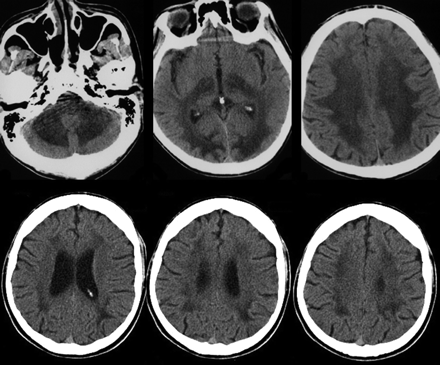
The above figure represents the acute and chronic effects of heroin. Following drug use, the brain morphology changes, as shown in the MRI. In the top row, the distinction between gray and white matter has faded, and intracranial pressure has increased within the brain. As a result of “chasing the dragon”, or heroin inhalation, the fumes caused injury to the white matter, which led to brain edema. There’s a degradation in premature white matter, which can be detrimental to long-term communication between brain regions. Specifically, premature white matter is underdeveloped cerebral white matter, and it can be unmyelinated due to heroin use. For example, a decrease in the volume of white matter can directly affect visual and working memory, and changes in myelin structure result in a slower conduction of information. Specifically, following heroin inhalation, diffused white matter is seen: the top row shows precisely how the supratentorial and infratentorial areas have swelled immensely throughout the acute phase. Acute effects represent widespread edema in the brain’s white matter above and below the structure separating the cerebrum from the cerebellum—the tentorium cerebelli. After six months, the follow-up shows a mental decline, the onset of psychosis, and bilateral degeneration.
Leukoencephalopathy affects the communication and exchange of information between different brain areas, which can occur in conjunction with generalized brain edema. Brain edema, or swelling of the brain, occurs when a large amount of excess fluid builds up in the brain’s cells or tissues ((ScienceDirect Topics, Leukoencephalopathy. https://www.sciencedirect.com/topics/neuroscience/leukoencephalopathy (2022). https://pmc.ncbi.nlm.nih.gov/articles/PMC9669816/ (2022).)). Symptoms can include difficulty speaking, walking, dizziness, headache, irregular breathing, seizures, and vomiting, among others ((S. M. Nehring, P. Tadi, S. Tenny, Cerebral edema. StatPearls. https://www.ncbi.nlm.nih.gov/books/NBK537272/ (2023).)). Large amounts of damage to the brain can disrupt the chemical equilibrium, further leading to the onset of psychosis, and high inflammation can show a decrease in cognitive performance, with an increase in psychotic symptoms ((P. D. Plummer, F. Banu, C. Nwabueze, C. D. Nisenoff, A. Jolayemi, Traumatic Brain Injury Induced Secondary Psychosis in a Young African American Male. NIH PMC.)).
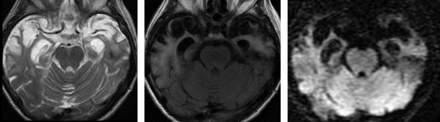
Acknowledging the figure above, following heroin inhalation, chronic effects can be seen as heroin-induced leukoencephalopathy, which starts to weaken the consciousness over time, as characterized by the diffusion of white matter ((R. Sharma, S. Sekhon, F. Lui, M. Cascella, White Matter Lesions. NIH Bookshelf. https://www.ncbi.nlm.nih.gov/books/NBK562167/ (2024).)). The effects of heroin inhalation can begin with issues from balance and coordination, but progress to muscle hypotonia and motor impairment, which can be fatal. This patient’s prolonged usage of heroin led to symptoms of psychosis and dementia, shown as degeneration leading to signs of leukoencephalopathy. In the MRI, lesions and degeneration are present in the white matter of the temporal lobes ((S. Geibprasert, M. Gallucci, T. Krings, Addictive illegal drugs: Structural neuroimaging. American Journal of Neuroradiology. 31(5), 803–808 (2010). https://doi.org/10.3174/ajnr.A1811)). In other words, if an individual has severe lesions in the white matter, they may experience atrophy of the grey matter, which can lead to cognitive impairment, mood disorders, balance dysfunction, and overall functional decline ((R. Sharma, S. Sekhon, F. Lui, M. Cascella, White Matter Lesions. NIH Bookshelf. https://www.ncbi.nlm.nih.gov/books/NBK562167/ (2024).)).
Therefore, with the help of MRIs, we can begin to fill the gaps on how the use of specific drugs interacts with the onset of psychosis and further schizophrenia. In conclusion, these images can point scientists to further research into the prevention of the onset after the ingestion of specific narcotics and further form treatments.
Identifying Prolonged Substance Abuse and Contemporary Use of Artificial Intelligence
With the prevalence of advancements in new neuroimaging tools and artificial intelligence, we can make connections and identify changes in the brain due to the effects of prolonged substance abuse. Additional research on the impact of substance misuse has emerged in the form of neuroimaging through positron emission tomography (PET), functional magnetic resonance imaging, and spectroscopy ((K. S. Murnane, A. N. Edinoff, E. M. Cornett, A. D. Kaye, Updated perspectives on the neurobiology of substance use disorders using neuroimaging. NIH.gov. https://pmc.ncbi.nlm.nih.gov/articles/PMC10424678/ (2023).)). These tools specifically check the drug’s impact on brain flow and neurotransmitter activity. Specifically, this is measurable through changes in the oxygen and blood flow. Due to these innovations, some findings suggest that substance misuse can alter mental skills. For example, it may disrupt daily tasks and memory, but stress systems can be used to identify neurological effects on people with prolonged substance abuse ((K. S. Murnane, A. N. Edinoff, E. M. Cornett, A. D. Kaye, Updated perspectives on the neurobiology of substance use disorders using neuroimaging. NIH.gov. https://pmc.ncbi.nlm.nih.gov/articles/PMC10424678/ (2023).)). Deficits in executive function occur in the prefrontal cortex, affecting the Stop system, which controls stress and emotions and is triggered by the relapse of stressful events ((Office of the Surgeon General (US), The Neurobiology of Substance Use, Misuse, and Addiction. US Department of Health and Human Services. https://www.ncbi.nlm.nih.gov/books/NBK424849/ (2016).)). Specifically, PET examines neurotransmitter systems to assess behavior reinforcement, receptor availability, and how the release of neurotransmitters, such as dopamine, represents the functional and metabolic consequences of chronic substance misuse. Specifically, one example of PET’s findings is the decreased amount of brain metabolism following cocaine use ((K. S. Murnane, A. N. Edinoff, E. M. Cornett, A. D. Kaye, Updated perspectives on the neurobiology of substance use disorders using neuroimaging. NIH.gov. https://pmc.ncbi.nlm.nih.gov/articles/PMC10424678/ (2023).)). Ultimately, by solely focusing on the use of PET, scientists can view the effects of substance misuse through long-term observation of individuals, which can further initiate the potential to view common scenarios of what psychosis may look like neurologically in different cases, and the direct impact on the brain from drugs.
Artificial Intelligence (AI), which utilizes computer skills to solve problems using human intelligence, has become increasingly prevalent in society. In the medical field, AI usage has prevailed through patient scheduling, assessing misuse of prescription opioids, and distinguishing cocaine-dependent individuals. With inconsistencies, 461 out of 517, or 89% of models, are at risk for high bias ((K. S. Murnane, A. N. Edinoff, E. M. Cornett, A. D. Kaye, Updated perspectives on the neurobiology of substance use disorders using neuroimaging. NIH.gov. https://pmc.ncbi.nlm.nih.gov/articles/PMC10424678/ (2023).)). Specifically, with such a high bias rate, the actual results of a study can be unreliable and, therefore, invalidated. As a result, the AI-based neuroimaging model was deemed unacceptable for clinical practice use. However, with the implementation of strategies strictly enforced to reduce bias, there is reasonable speculation that AI’s promising results will be used in clinical practices ((K. S. Murnane, A. N. Edinoff, E. M. Cornett, A. D. Kaye, Updated perspectives on the neurobiology of substance use disorders using neuroimaging. NIH.gov. https://pmc.ncbi.nlm.nih.gov/articles/PMC10424678/ (2023).)). In February 2024, contemporary AI usage through machines demonstrated an algorithm that predicts psychosis before it occurs. This could be used further to contrast individuals who abuse substances with individuals who do not ((E. Lee, J Torous, M. D. Choudhury, C. A. Depp, S. A. Graham. H. Kim, M. P. Paulus, J. H. Krystal, D. V. Jeste, Artificial intelligence for mental healthcare: Clinical applications, barriers, facilitators, and artificial wisdom. NIH.gov. https://pmc.ncbi.nlm.nih.gov/articles/PMC8349367/ (2021).; Office of the Surgeon General (US), The Neurobiology of Substance Use, Misuse, and Addiction. US Department of Health and Human Services. https://www.ncbi.nlm.nih.gov/books/NBK424849/ (2016). )). The prodromal phase is classified as the progressive changes and emerging symptoms related to the onset of schizophrenia ((S. Booth, A. Gopal, Schizophrenia prodrome. WebMD. https://www.webmd.com/schizophrenia/schizophrenia-prodrome (2024).)). With the use of AI, we can identify the risk factors for the shift from psychosis to schizophrenia through additional research and experiments, and identify the disorders before the onset of the prodromal phase ((E. Lee, J Torous, M. D. Choudhury, C. A. Depp, S. A. Graham. H. Kim, M. P. Paulus, J. H. Krystal, D. V. Jeste, Artificial intelligence for mental healthcare: Clinical applications, barriers, facilitators, and artificial wisdom. NIH.gov. https://pmc.ncbi.nlm.nih.gov/articles/PMC8349367/ (2021).; Office of the Surgeon General (US), The Neurobiology of Substance Use, Misuse, and Addiction. US Department of Health and Human Services. https://www.ncbi.nlm.nih.gov/books/NBK424849/ (2016).)). Specifically, neuroimaging research has begun to provide insights into both treatment and substance use disorder with emerging technology from the changes in different brain regions ((E. Lee, J Torous, M. D. Choudhury, C. A. Depp, S. A. Graham. H. Kim, M. P. Paulus, J. H. Krystal, D. V. Jeste, Artificial intelligence for mental healthcare: Clinical applications, barriers, facilitators, and artificial wisdom. NIH.gov. https://pmc.ncbi.nlm.nih.gov/articles/PMC8349367/ (2021).; Office of the Surgeon General (US), The Neurobiology of Substance Use, Misuse, and Addiction. US Department of Health and Human Services. https://www.ncbi.nlm.nih.gov/books/NBK424849/ (2016).)). With AI, there is a rising potential to predict psychosis with the use of longitudinal data by focusing solely on those who abuse substances. If the data can identify similar impairments in the brains of those diagnosed with psychosis, and those who abuse substances, such as alterations in neural circuitry—the network of connections between neurons that enable the body to perform daily functions—there is potential in identifying the correlation of the coexistence of psychosis or schizophrenia developed from illicit drugs.
Methods
This literature review consists of peer-reviewed articles that reflect the current status of research pertaining to drug use and the development of psychiatric disorders. Data sources, including accredited medical journals and government platforms, such as the National Institute of Health, were analyzed to produce reliable and unbiased results. Specifically, the evidence emphasizes the gap in research on the impact of narcotics on psychiatric illnesses, further demonstrating how the brain is negatively affected by the use of narcotics. A few standard search terms inputted when analyzing databases included narcotics, psychosis, schizophrenia, or MRI results following narcotic use. Additionally, with the use of MRI scans, scientists can observe any effects on the brain through tissue or structural changes. Similarly, to assess the impact of these drugs on the brain, I utilized reliable sources that discuss the chemical effects of these substances on the brain, for example, how drug consumption can alter neurotransmitters, which transmit signals throughout the body. Furthermore, including reliable sources that contain generalized statistics can enhance the clarity and validity of experiments by demonstrating an overall relation to the population and case studies through credible sources. Specifically, sources that focused on drugs outside the scope of this paper, such as inhalants or depressants, were left unanalyzed, and those exhibiting bias were deliberately excluded. Quality assessment tools, such as CASP, were employed to evaluate the reliability of the included studies and minimize bias towards any results.
Discussion
There is a lack of thorough knowledge and research on the correlation between narcotics, psychosis, and schizophrenia. For example, upon meticulous analysis of medical journals and various websites, there is a scarcity of research on specific drugs and how they affect the onset of these disorders. Conversely, there is an abundance of articles regarding each topic specifically, like “What is Schizophrenia,” or whether specific drugs, like cocaine, cause schizophrenia. However, researching the co-occurrence of symptoms like psychosis and disorders arising from different drug classifications has yet to be proven. Narcotics do not directly cause psychosis and schizophrenia. However, mental disorders and narcotics can augment addiction to euphoric feelings and short-term relief from drug consumption, and in doing so, alter the body’s brain chemistry as seen in MRIs. There is a vast amount of research on the individual topics of illicit drugs and drug-induced schizophrenia or psychosis. This review organizes the literature to help inform new treatments and experiments that may reduce symptoms arising from psychosis and schizophrenia, and additionally identify these illnesses before the onset of the disorder.
Specifically, individuals with these mental illnesses may experience adverse effects: schizophrenia consists of hallucinations and delusions, causing an individual to lose touch with reality, leading to disorganized thinking, diminished emotional expression, and impaired social functioning.
Conversely, psychosis alters the behavior of a person mentally and physically. On the other hand, drugs inducing psychotic episodes include cannabis, amphetamines, psychedelic drugs, club drugs, and methamphetamines ((Priory Group, Drug-induced psychosis. https://www.priorygroup.com/mental-health/drug-induced-psychosis (2018).)). The significant finding correlated with psychosis is that drugs, including LSD, cannabis, and different narcotics, may suffer from detrimental effects on the brain and body when patients are simultaneously afflicted with psychosis, and with higher morbidity rates due to unhealthy physical state or social stigma ((National Collaborating Centre for Mental Health, Psychosis with coexisting substance misuse. https://www.ncbi.nlm.nih.gov/books/NBK109796/ (2011).)).
Limitations of the present analysis include finding a large population who have been continuously observed for the effects of prolonged substance abuse on specific mental conditions, known as longitudinal data. Scientific studies, such as Randomized Clinical Trials (RCTs), are the “gold standard” for human studies. However, due to the high cost and ethical constraints of RCTs, studies into the effect of drugs through this experimental type are a primary constraint. Specifically, the inability to give illicit drugs to those who already have illnesses is unethical, even if RCTs are more feasible to rely on. On the other hand, scientists rely on epidemiological studies to observe real-world populations in the health care field. Still, it may introduce confounding variables and doesn’t determine causation; it only determines correlation due to the possibility of bias. In the future, studies that can be conducted can include how to prevent psychosis and schizophrenia from the prodromal stage by forming connections through distinct neuroimaging tools.
Conclusion
Although there is an abundance of research into schizophrenia, psychosis, and narcotics as stand-alones, there is a disparity when understanding the impact consuming narcotics has on the onset of psychosis and schizophrenia as their prevalence in society rises. As the use of narcotics surges, misuse and addiction rates also tend to increase, forming a need for more research into the pharmacology and research field, which can create the potential to improve the quality of life for patients, both short and long-term. The investigation into narcotics and their correlation to mental disorders can lead to effective treatment and earlier prognoses. Scientists can further explore this approach through the use of MRIs and the application of contemporary technology in their experiments. As a start, scientists can begin forming clusters and tracking cohorts of individuals based on their substance use patterns to create longitudinal data and record the specific effects of narcotics on psychotic episodes or schizophrenia progression.